
Old Testament Study Part II: Bible Translations & Homeschool Studies
By social media standards, this post should have been out at the beginning of January. In fact, I had it all ready to go…research done, content created…all I needed to do was post it. But, I just didn’t feel good about it.
You see, a few years ago, I learned a valuable lesson the hard way when I rushed publishing a post because I felt pressured to share it at the “perfect time.” I regretted it for months because I knew it wasn’t what God had wanted me to say so this time I have been much more careful…making sure I feel aligned with what He has in mind here for my family, but also for sharing more publicly. At first I was frustrated and felt “behind,” but now I can see He was just getting me back on track and I’m right on time. I’ve reworked almost everything, made different choices, and now I can see where He has stretched and refined me and with that hindsight comes a lot of peace.
If you’re new around here, at the beginning of January we align our family scripture study with our church’s scripture study schedule and it plays a big part in our homeschool. This year, The Church of Jesus Christ of Latter-day Saints is studying the Old Testament so today I’m sharing some thoughts on bible translations, what we’re using, and how we’re tying it all into our homeschool. All faiths are welcome here…I just always try to be open about the perspective I’m coming from so no one feels misled. So, just know everything I’m sharing today comes from the lens of my faith.
For those familiar with Come, Follow Me, it is near and dear to my heart. Gospel study was the very first place I worked on when we decided to homeschool, because I knew, without question, that my highest priority was teaching my children the gospel. Now, a lot has evolved and I’ve changed and learned and grown so much over the last six years. If you’re brand new to homeschooling or just wanting to be more intentional with your kids scripture study, I’d recommend starting with my post: Old Testament Part I: Beginner Tips & Resources for Kids.
This post feels like the “next layer,” so I just don’t want anyone to feel overwhelmed. I hope this simply serves as a starting point for your own family’s spiritual journey. Every home will look different and my prayer is always that each family seeks the Lord’s guidance, listens to the Spirit, and makes decisions that fit their unique circumstances. I believe God honors the faithful work of parents who turn to Him and seek His companionship in educating their children.
Guidance on Bible Translations
New this year is the council of using other Bible translations outside of the KJV. This really threw me for a loop so if you’re feeling like you need some guidance on Bible translations, I’d highly recommend listening to a few things:
Inklings Institute: Emily Belle Freeman and John Hilton III went over the history of translations, misconceptions, and gave lots of advice and thoughts and examples of how they’ve used other translations for years.
Multiply Goodness: Nish is part of the Multiple Goodness team and is not LDS, but hoped on to help us out and it really was so helpful. I really appreciated hearing from someone who had lots of experience using other translations while also having such a high respect for our faith. I actually talked to her in my DMs about some of my concerns and she was very helpful.
David Butler: David also posted a really great informational video on bibles. He has a quick-reference PDF guide and YouTube video he’ll send you when you comment on his post.
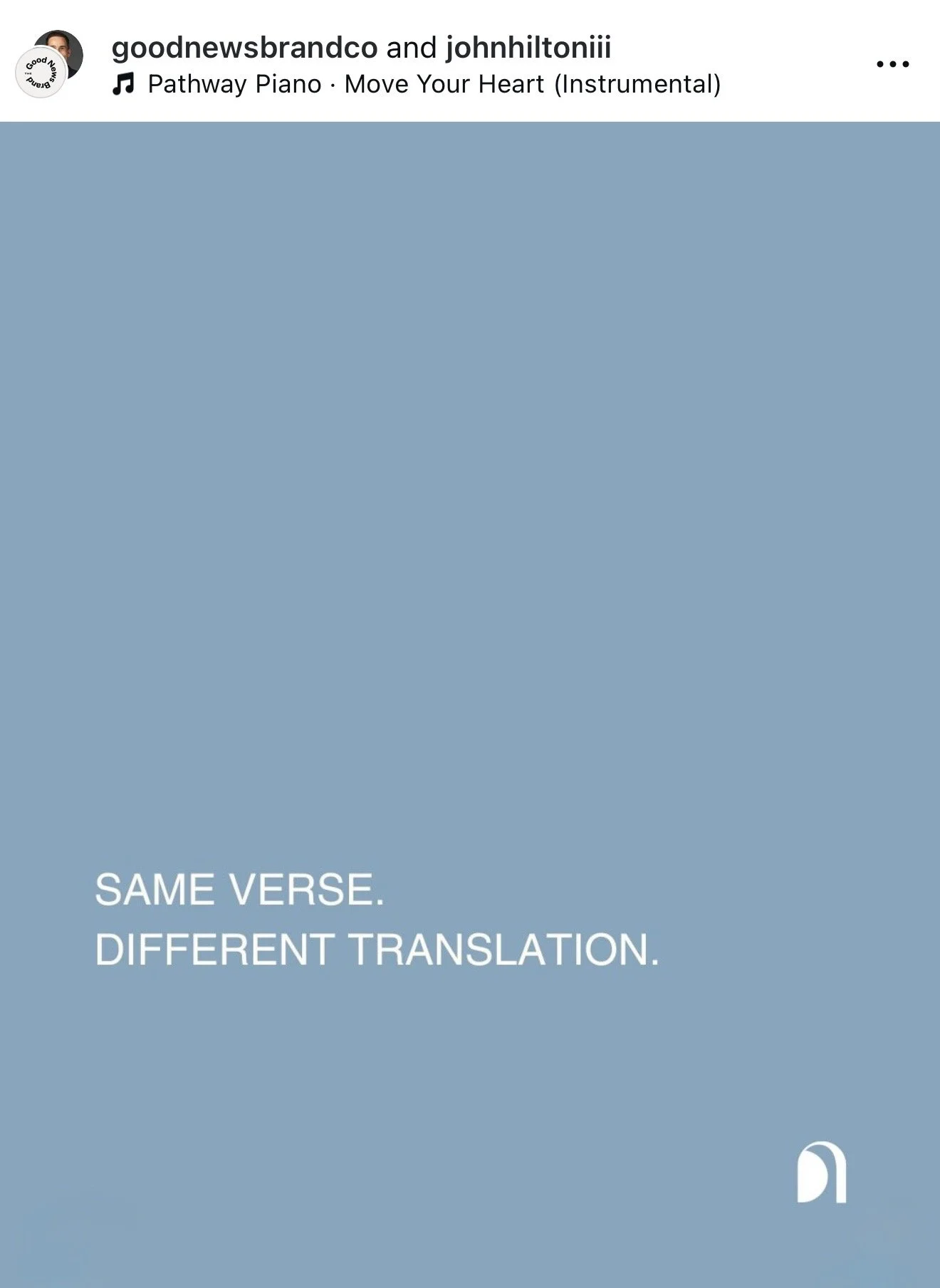
I’d also recommend this post from Good News Brand/John Hilton III that show side-by-side comparisons of translations.

What I Think Parents Should Know About Other Bible Translations
After a lot of time and research, using different translations with children is a very multi-layered topic, but I am just going to come at this from the perspective…if you’re wanting to just hand your child a bible to read independently, here are a few things I think it’s helpful if parents know.
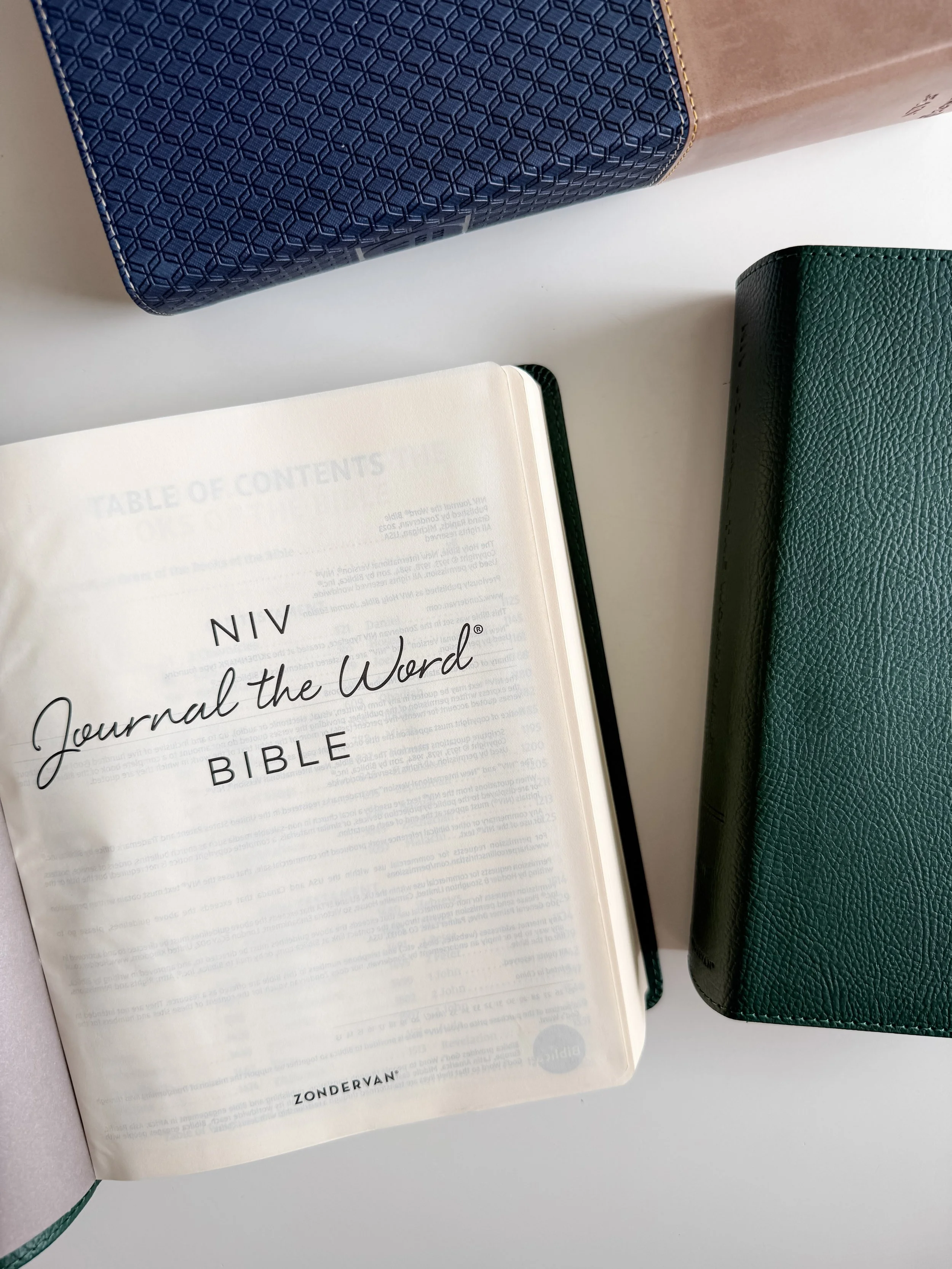
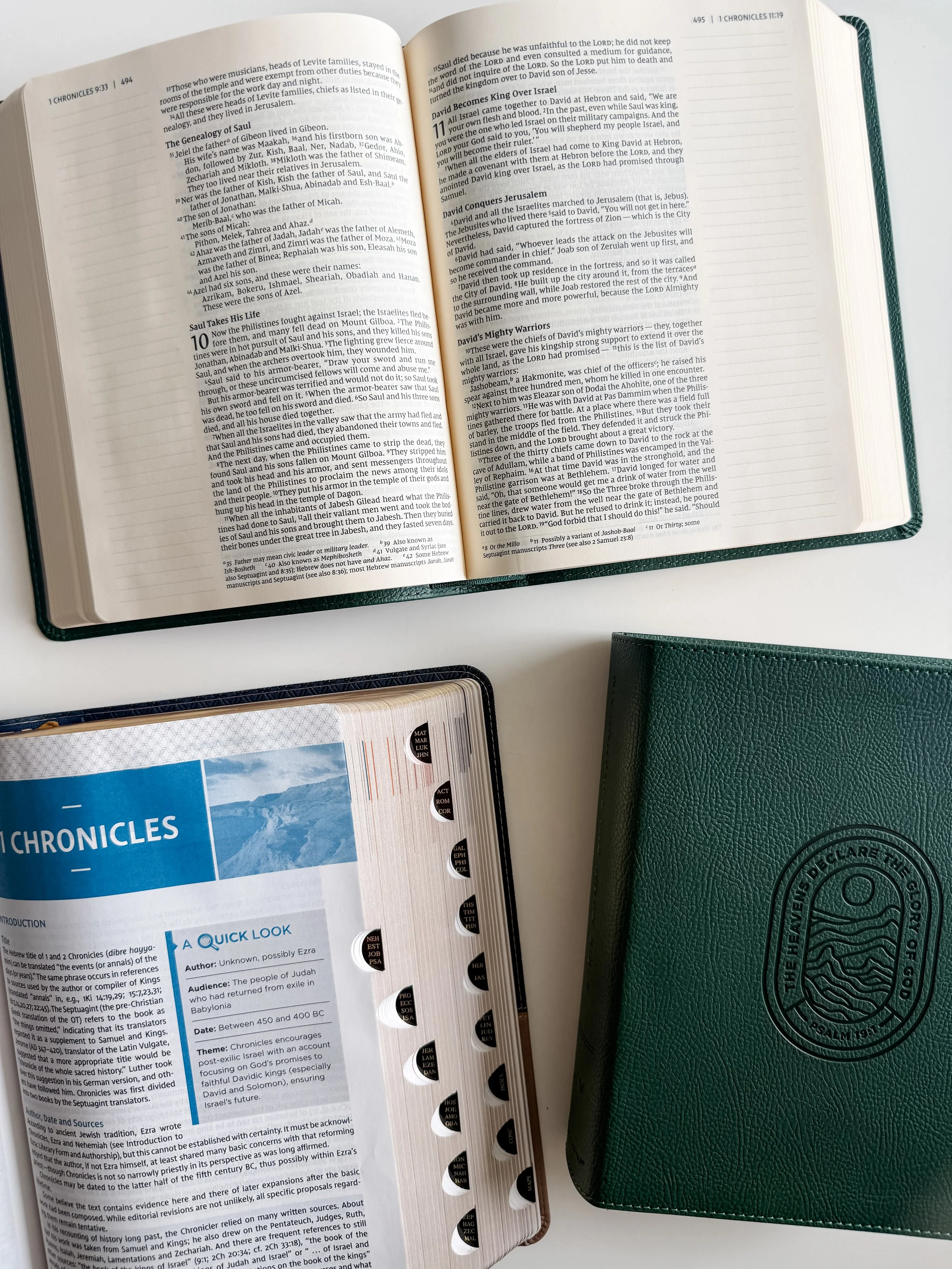
There are basically two types of bibles: study bibles and bibles without any commentary. I love the study bibles and I think, homeschool families especially, are drawn to these type of publications. Just know whoever publishes a study bible will have commentary that obviously aligns with their faith beliefs. I believe introducing ideas contrary to what our family believes is really important so this can be a great opportunity to discuss and find those things, but it may also not be the right way or the right timing just depending on your family. So, you get to decide.
The point of a translation that uses more modern language is to help us better understand what is going on in the text. This is great, but keep in mind with simpler text there is imagery in the Old Testament that may not just go over someone’s head anymore (like it does in versions like the King James). So, if you’re just planning to hand over an NIV to your 14 year old or even the NIrV for younger children, they will plainly encounter some violent and sexual imagery. When I was comparing different translations I used Judges 19 as a point of reference. I think this particular section is laced with a lot of layers of symbolism, but without some parental guidance in some of these areas, it can feel a little much. Again, how each family handles this will likely be different.
What Translations We’re Using
Me: NIV Study Edition. I landed on this as one to read along side my quad. And, I LOVE it. The extra commentary is really speaking to me. There are a few things that don’t align with what I believe, but the majority of it is just great. If you’re looking for a really simple version, I’d just stick to a bible without all the study notes, but if you’re craving depth and scholarly study then this is a good one.
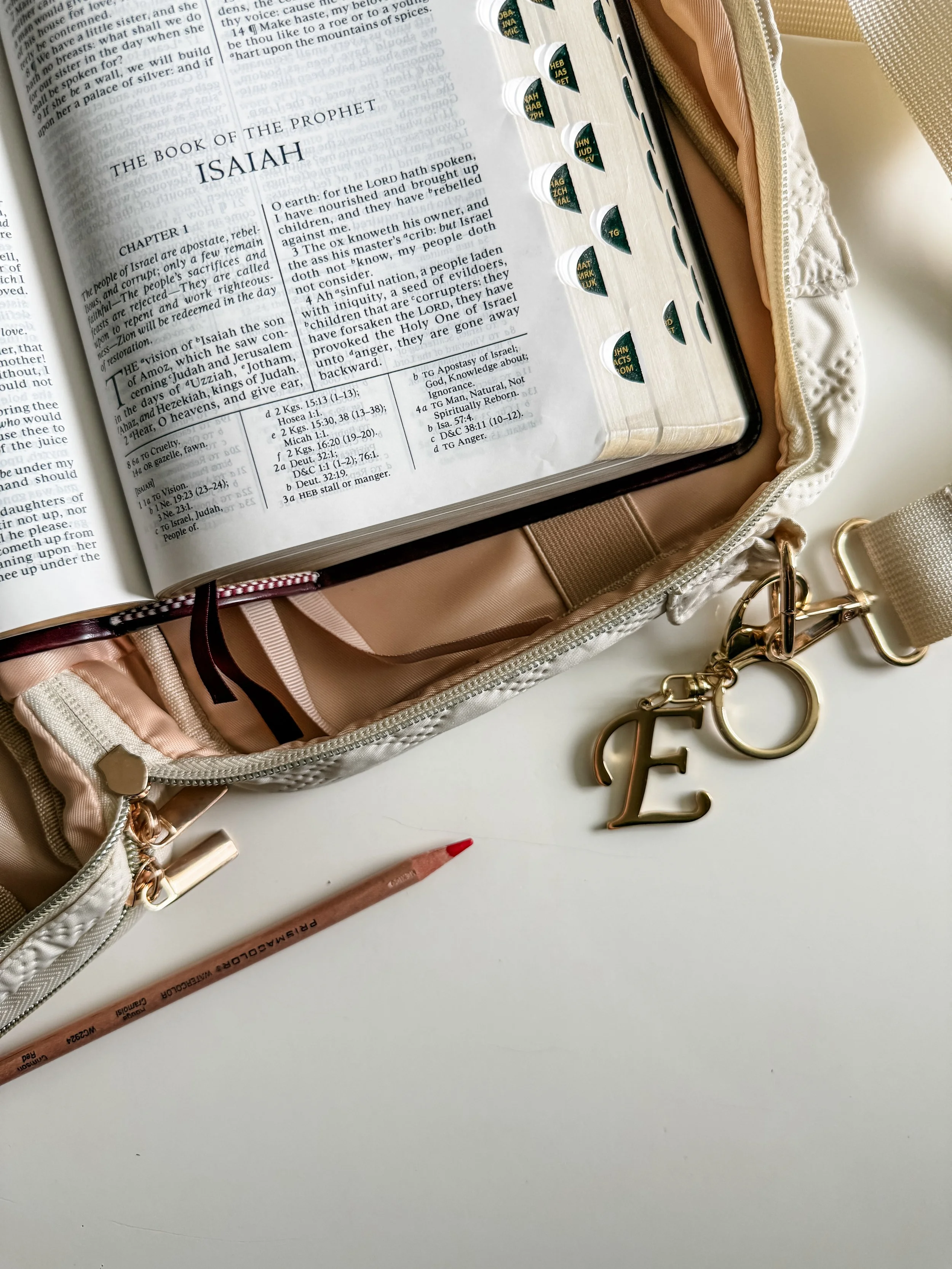
12 yo Girls: NIV. Finding the right version for my girls was so hard! We tried seven different versions! At the end of the day, they chose this one and we all felt the Spirit confirm it was the right one so we’re happy. Instead of using these just during our family scripture time, the girls have been reading it during their personal scripture study time.
9 & 6 yo Boys: After a lot of back and forth I decided to opt out of any new sets for my boys this year. We have some cheap KJV sets of the bible and this study version. But, I ultimately decided what was best for my boys this time around was more focus on bible stories & notebooking.
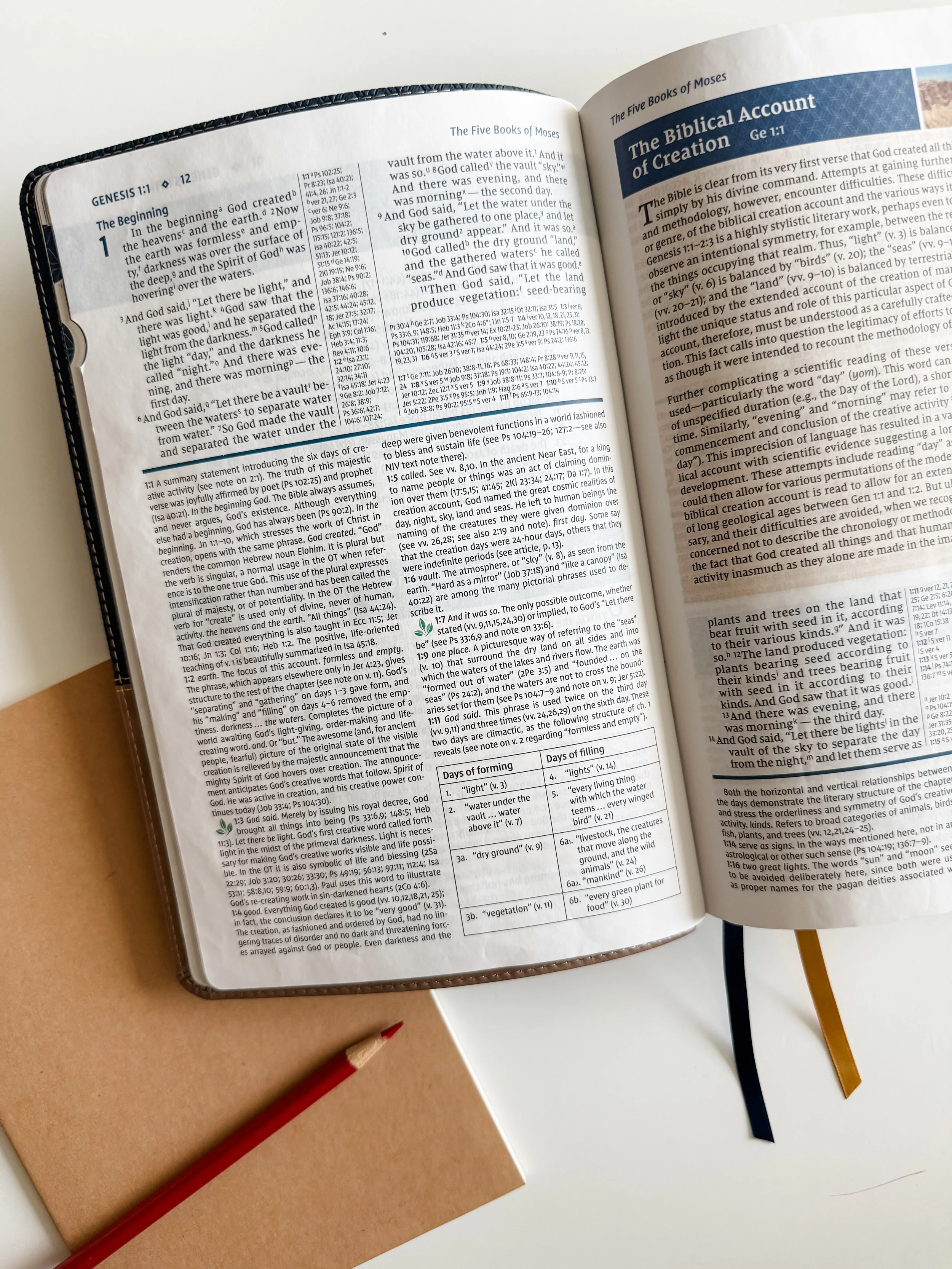

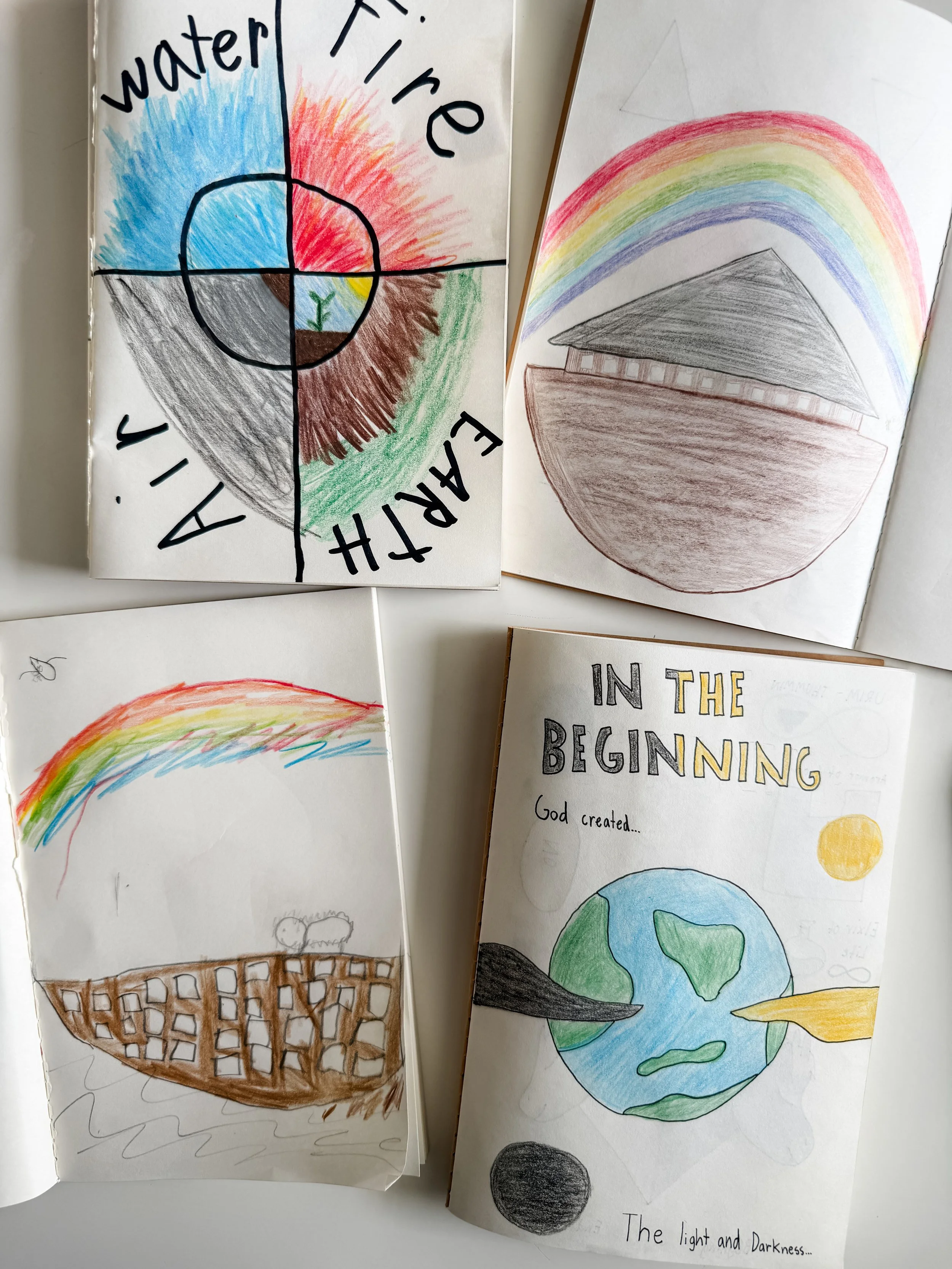
Notebooking
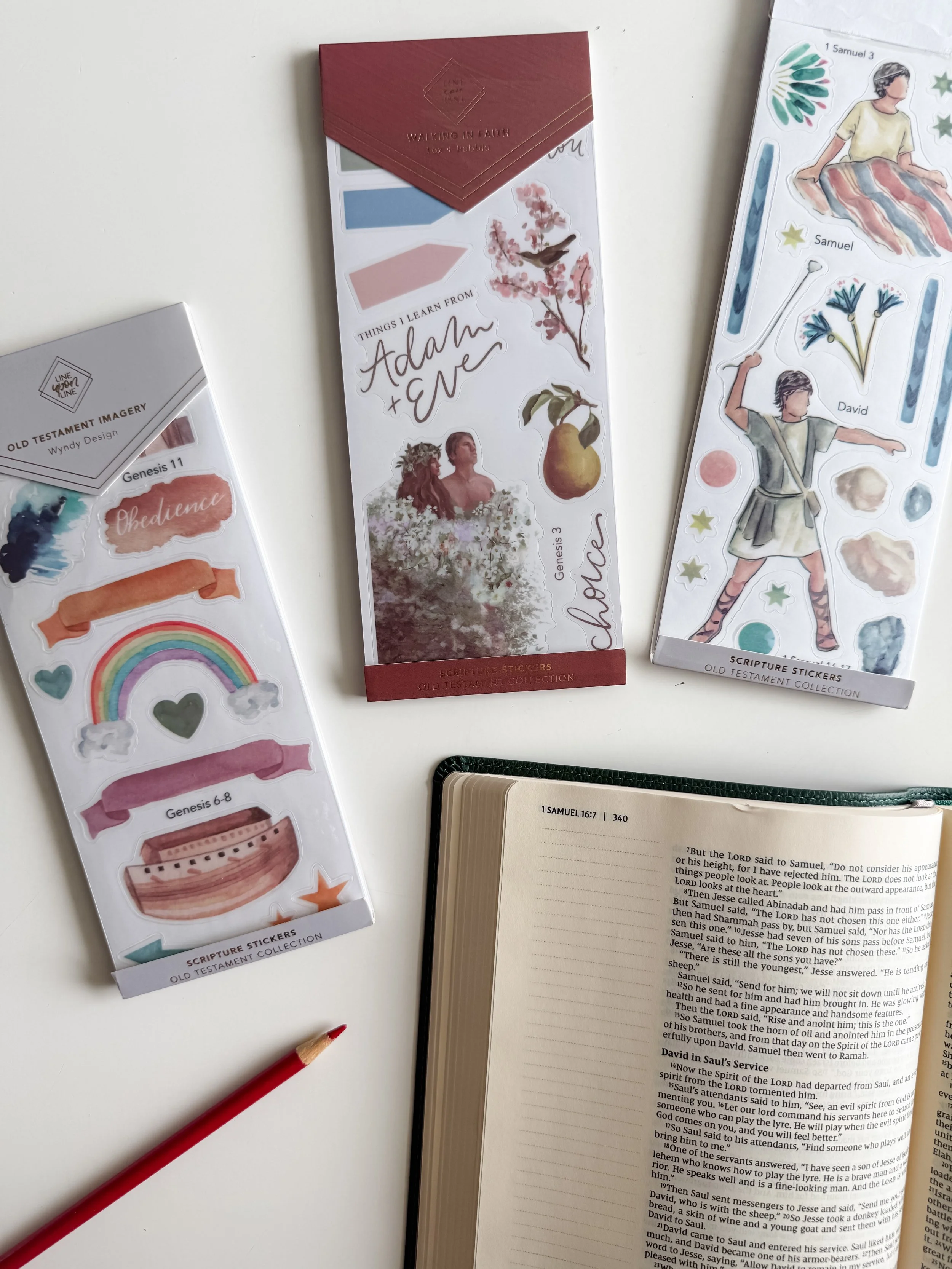
Historically, we’ve used journal scripture versions so we can notebook right in our scriptures, but, man, the OT journal editions can be so big! And, this year, with different versions, we ran into the issue that we’d all be working in different bibles, so I ultimately decided that during our family scripture time I’d focus on the stories and then just read out of my scriptures while the kids worked on notebooking pages. We’ve been doing this for a few weeks now and it’s worked out really well. For supplies we have:
Then I just have markers/colored pencils out and pull from a plethora of resources (see below) to help assist in teaching and inspiring notebooking pages.
Other Resources
This is basically just an eclectic list of a few other things I’m pulling from and would recommend to others.
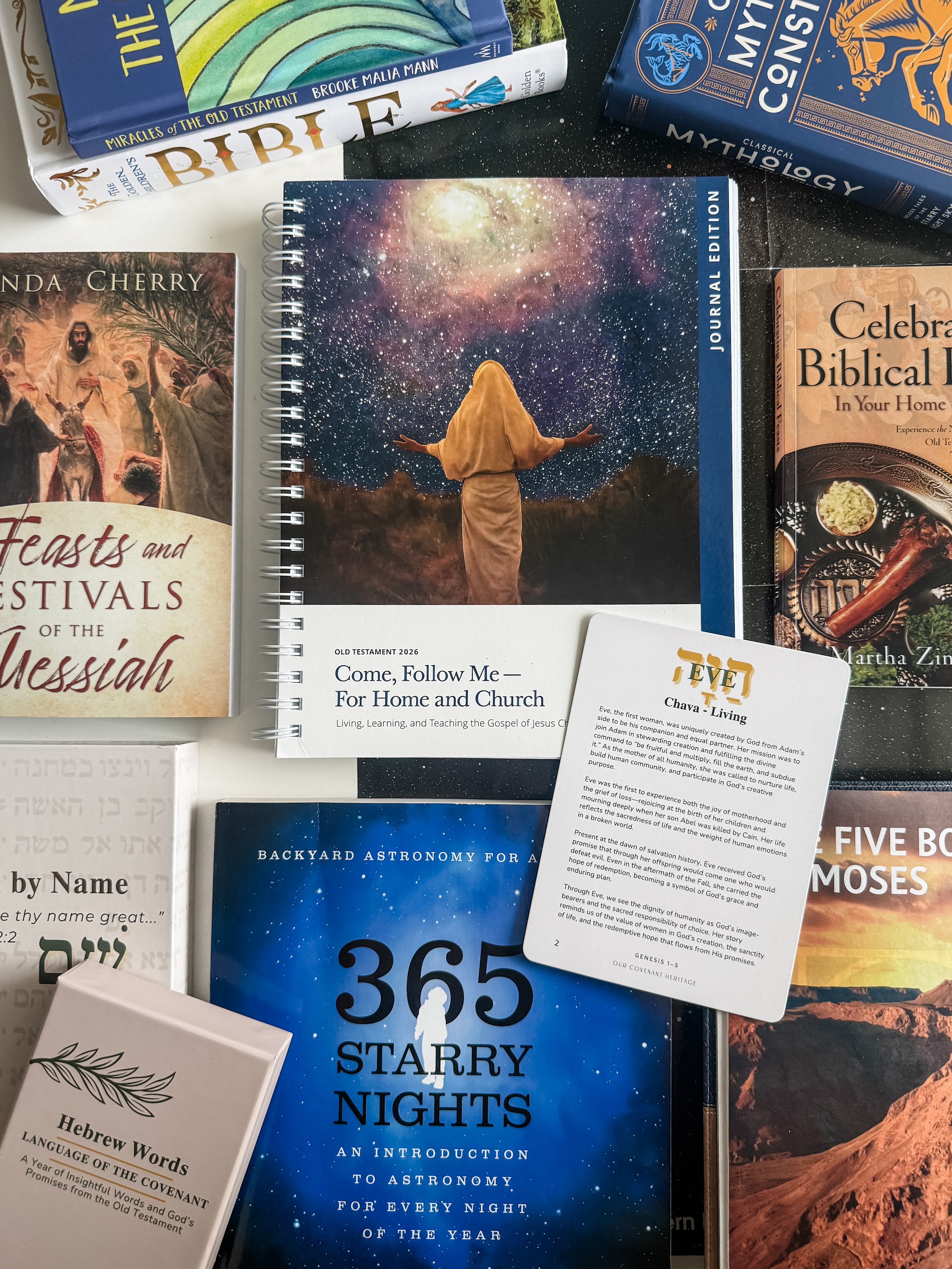
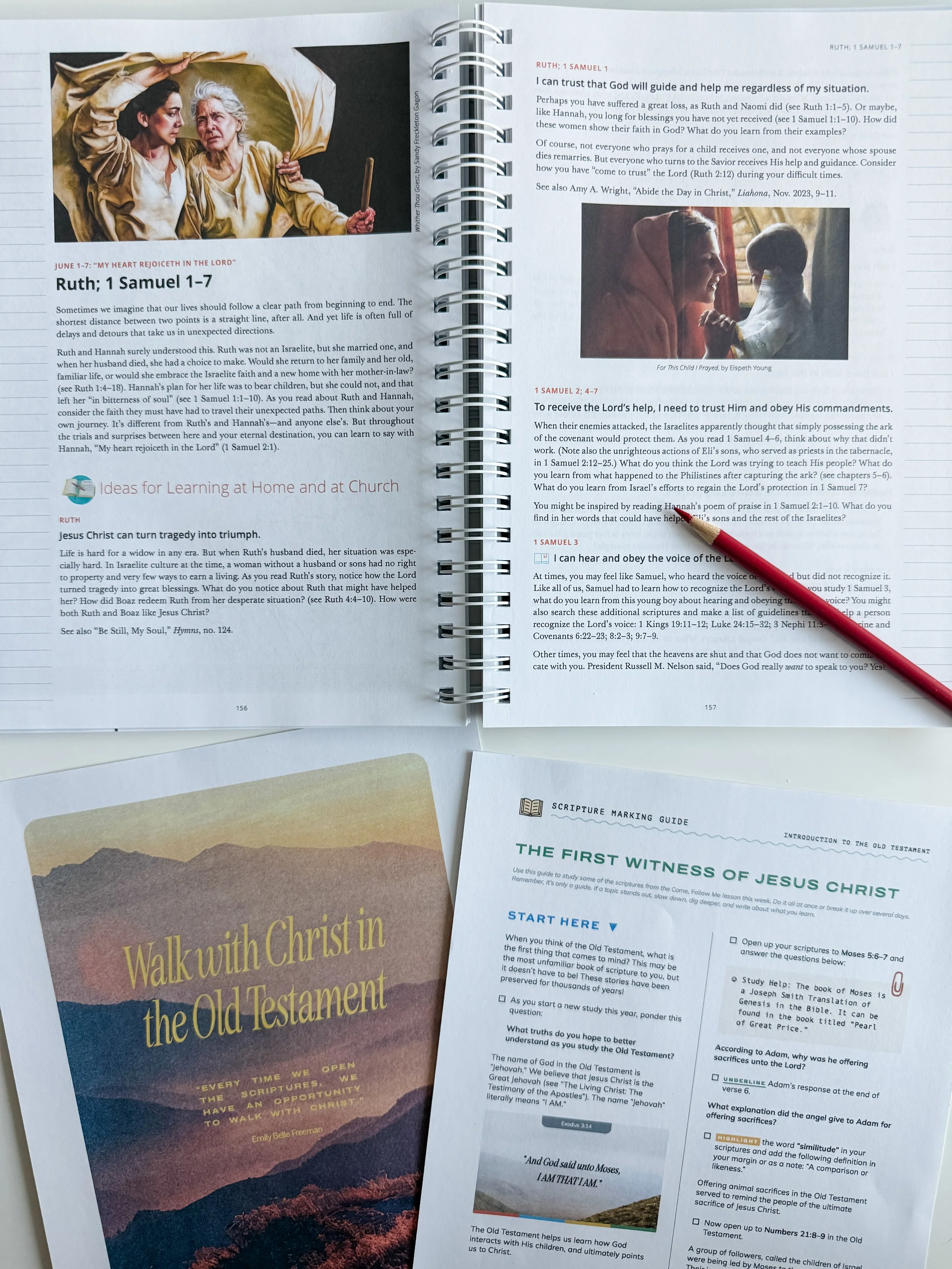
Come, Follow Me Journal Edition: I love the artwork in this and love the journal edition since it lays flat and I can easily rip out what I need.
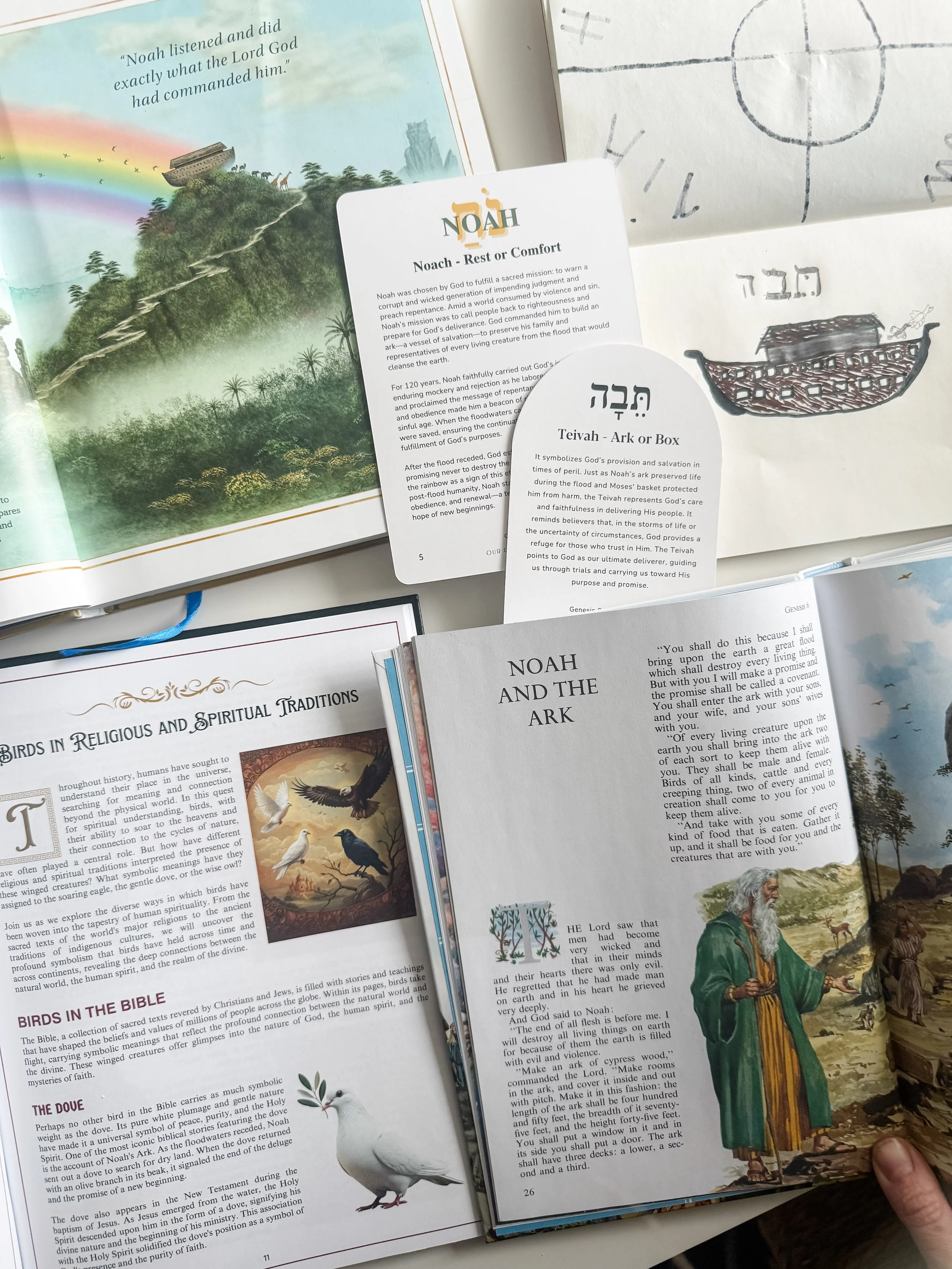
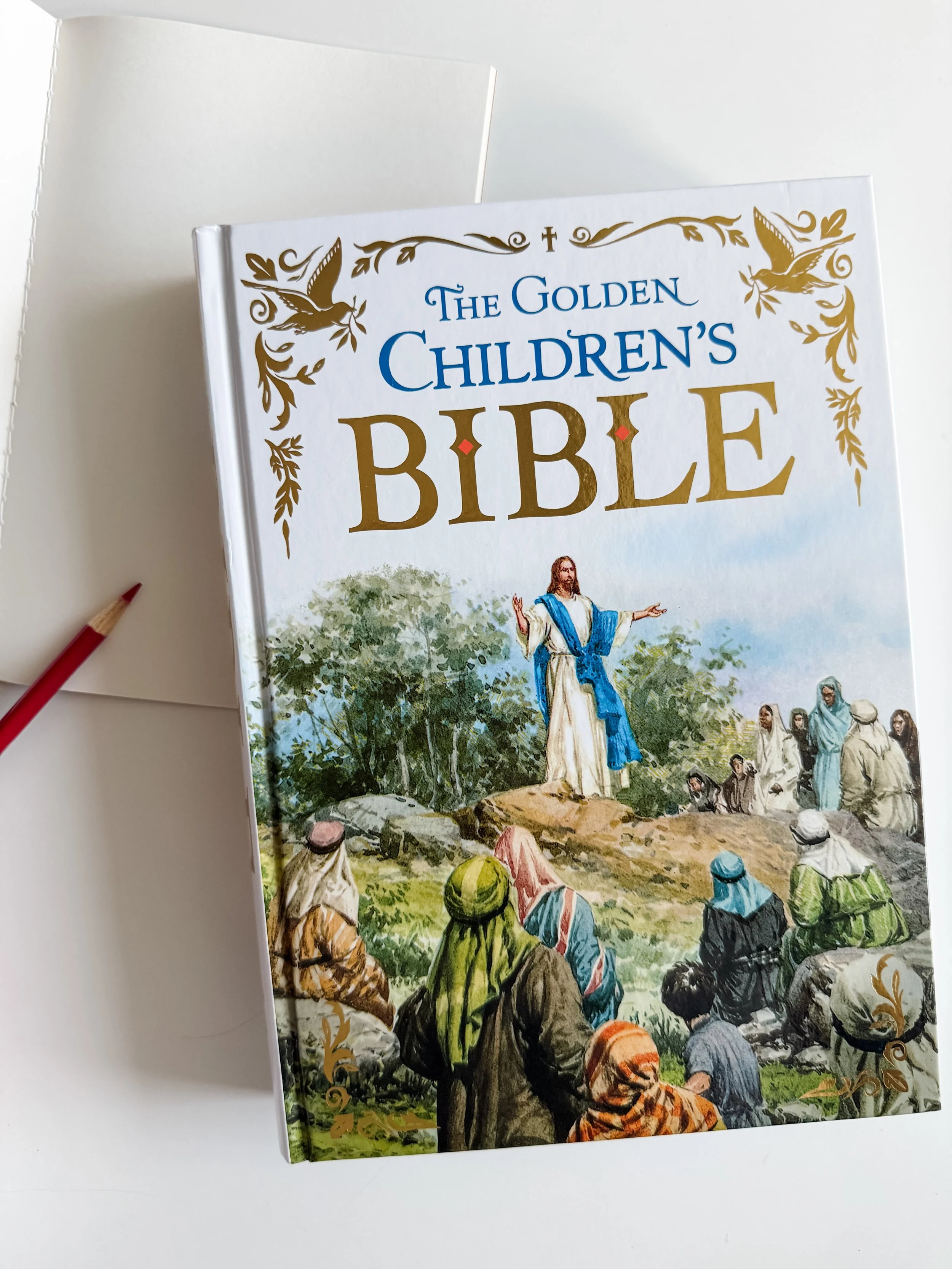
The Golden Children’s Bible: If you read my Part I post you’ll already know I am using this as our main storybook bible this year. After previewing a half of dozen I’m very happy with this one since it doesn’t insert additional commentary or opinion and it preserves a lot of the same imagery used in the scriptures which was really important to me.
DK Children’s Illustrated Bible Stories: I pulled from this the last time we studied OT and love it. The only downside to it is there aren’t as many stories in it as I would like. Parents should know there is a some biblical classical artwork in it which includes nudity and, just one small questionable comment about The Fall.
Red Headed Hostess Monthly Subscription: I am a long time user of RHH for a quick and easy resource and will recommend her products probably forever.
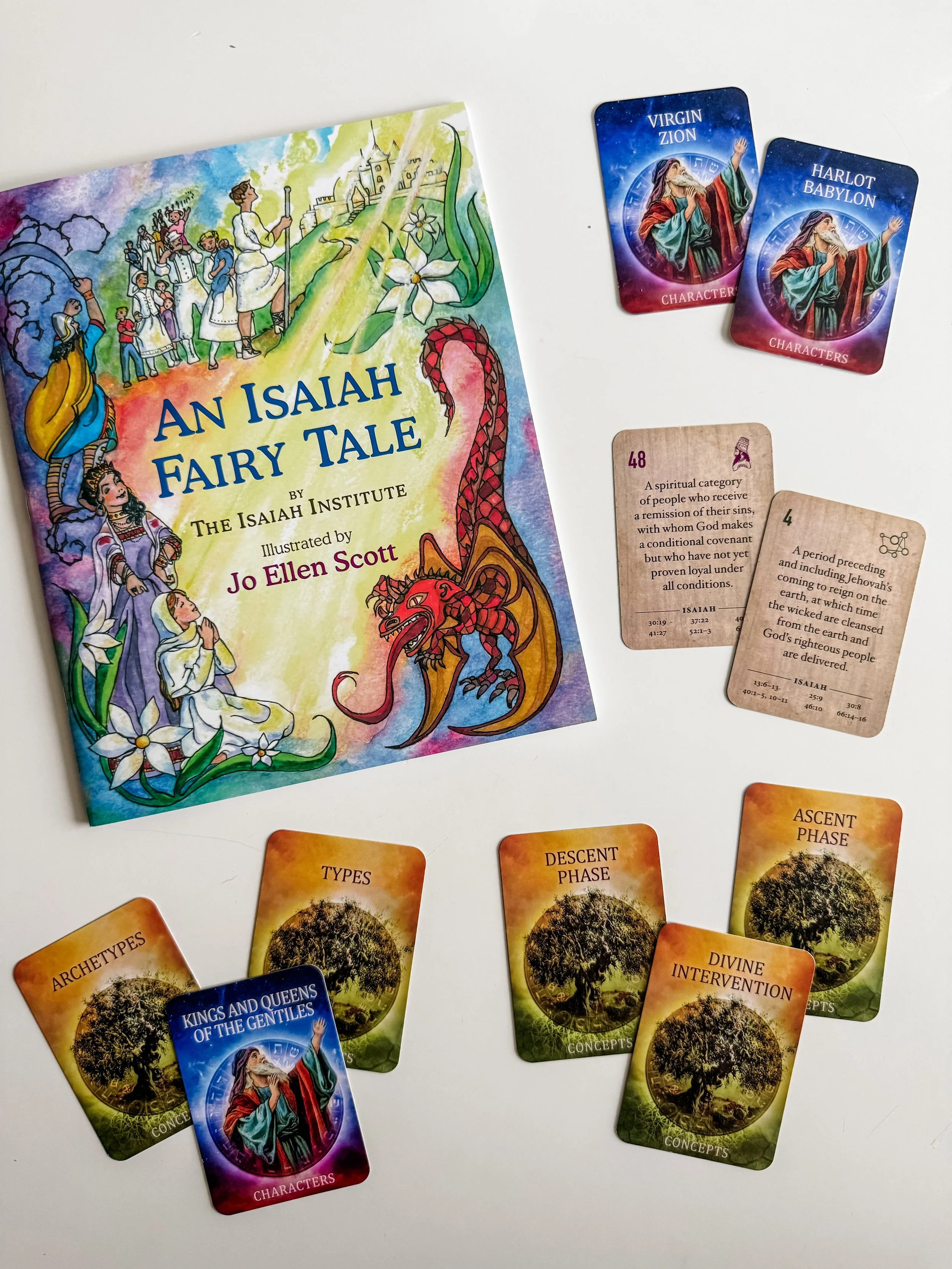
The Isaiah Institute: If you’re serious about studying Isaiah this year I would recommend anything from the Isaiah Institute. I read Isaiah Decoded a few years ago and that is a good place to start. Also, they’re visually appealing for kids, but the The Isaiah Fairytale and flashcards, have also helped me and I’m going to be using the flashcards has part of our morning devotionals later in our study this year.
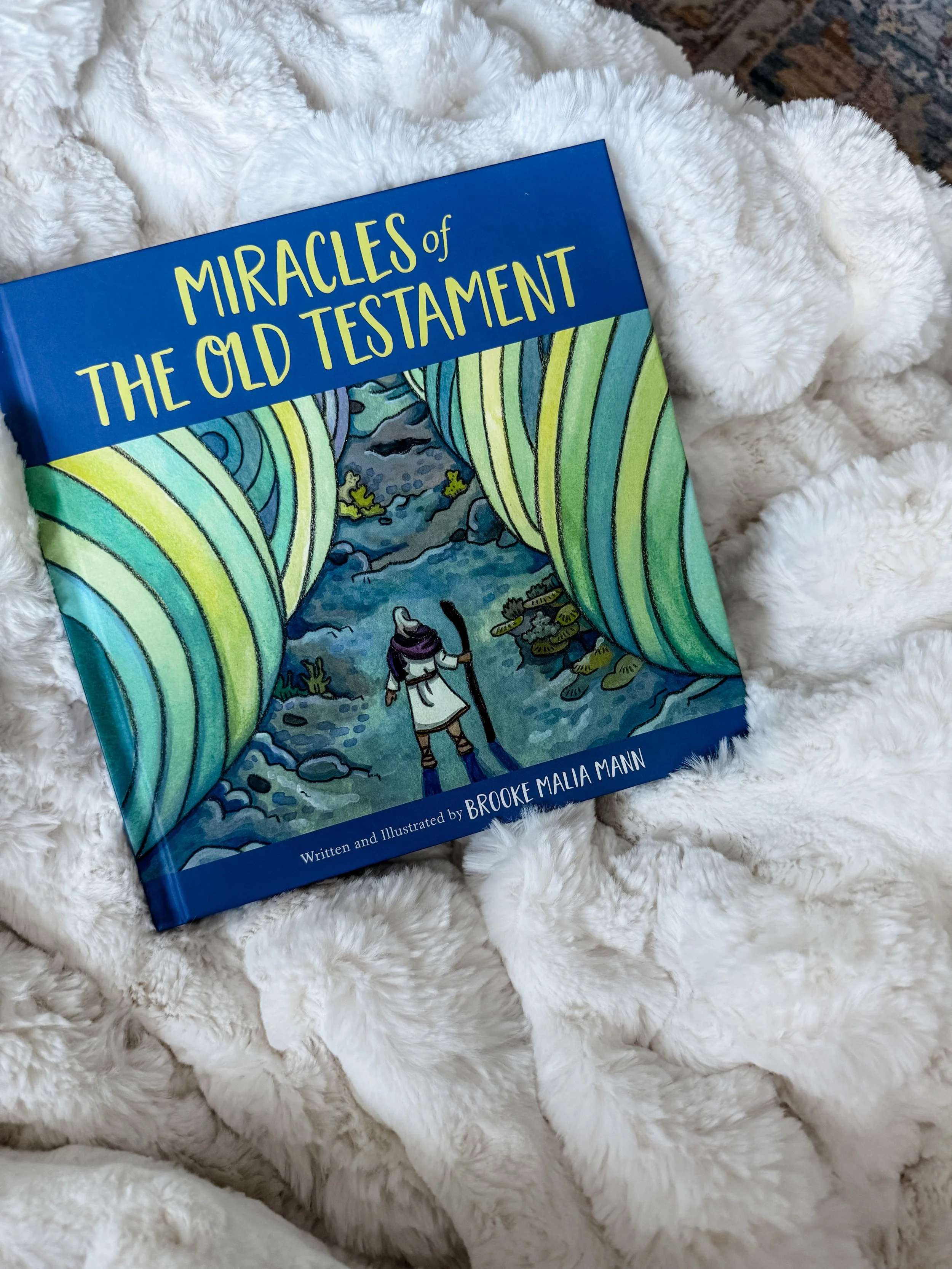
Miracles of the Old Testament: This is a really simple picture book that highlights so of the best known stories of the Old Testament.
My Go-To Podcasts
Talking Scripture: I’m new to this podcast this year and it’s the one I’m listening to every week. I LOVE it. Mike Day and Bryce Dunford dig deep into the historical background of the bible, literature of the time, and bring it all together using the Book of Mormon and modern day revelation.
Unshaken Podcast: I am a huge Jared Halverson fan and have listened to him for years so this is another one I’d recommend if you’re looking for a good go-to.
The Ancient Tradition Podcast. I’ve listened to every episode of this podcast and would highly recommend it for older youth and adults. It does not coordinate with CFM, but it is my very favorite podcast and coordinates wonderfully with a study of the Old Testament. Each episode builds on another so you have to begin with episode 1. Especially if you’re hoping to sharpen your symbolic literacy - this is where you’ll want to spend your time.
Homeschool Studies
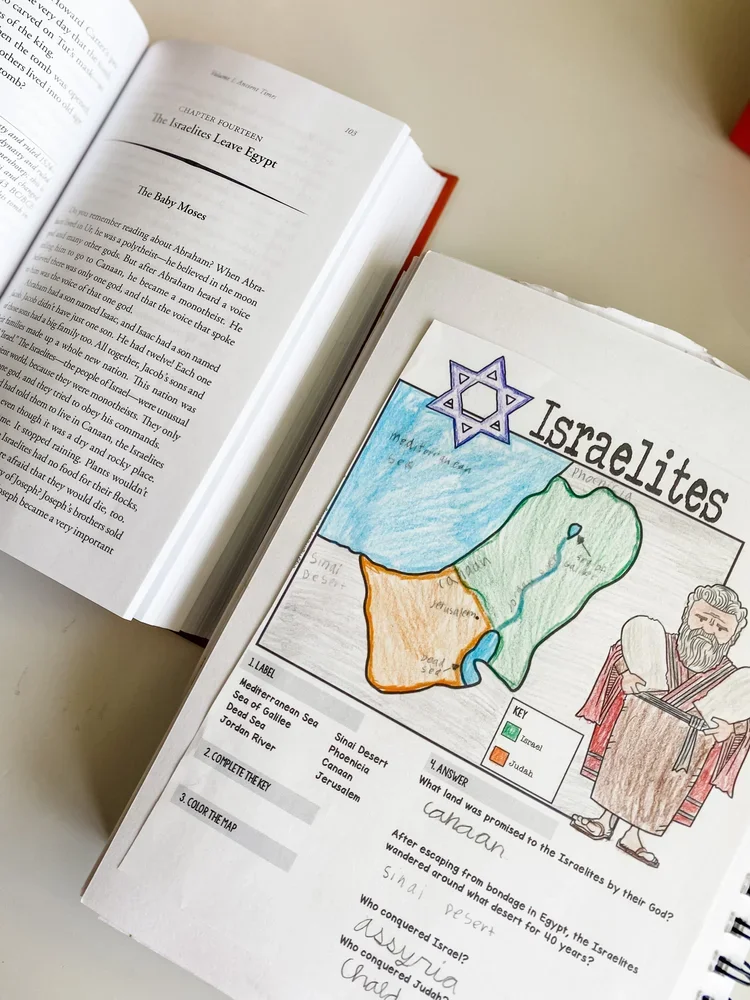
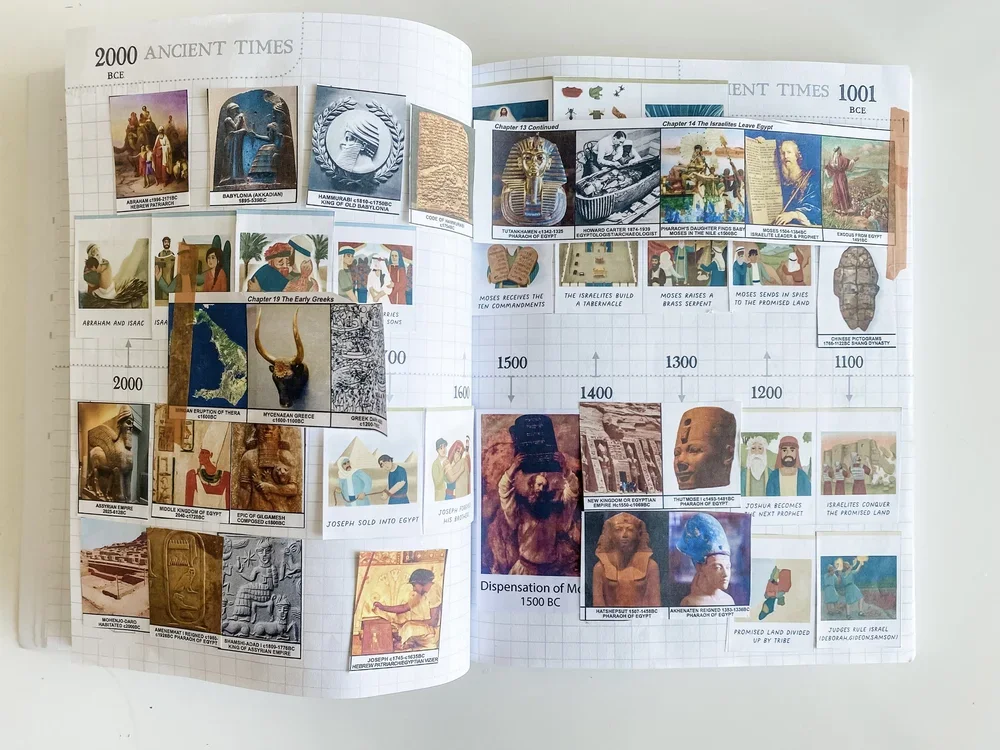
As I shared in a recent post about our new rhythm, I’ve been trying to be more intentional with our family study time. That’s usually when we cover history or science. And, in the past, I’ve liked to line up our history studies with the book of scripture we’re reading. For example, when we studied the Old Testament, we used Story of the World: Ancient Times which I’d definitely recommend. It would be great to start now or even next school year.
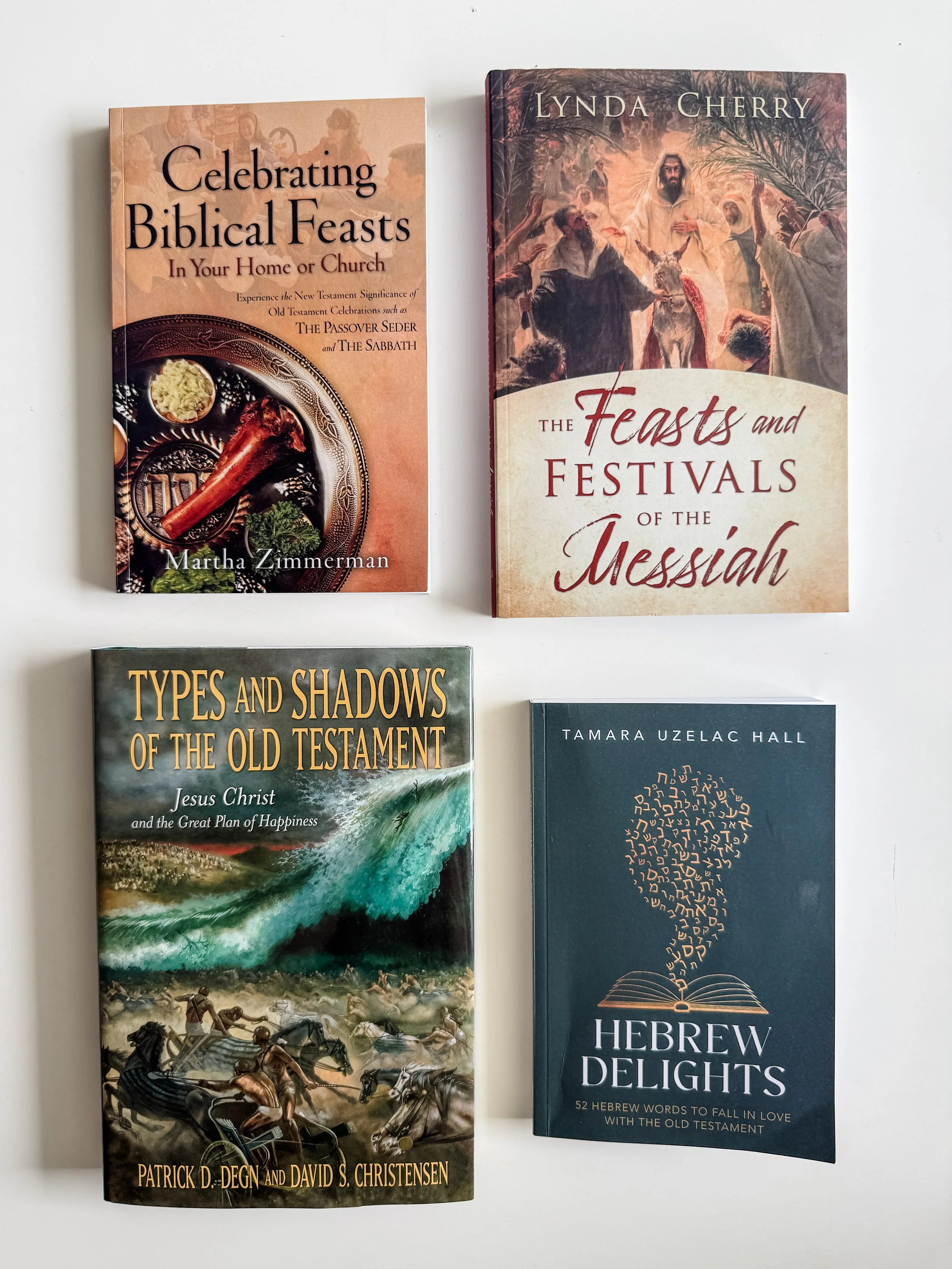
But as I’ve mentioned, our days have just been so choppy running here and there that it’s been harder for us to have our family studies. So instead of treating everything separately, I’ve worked to combine a bunch of things and I’m sure this will still evolve, but I just know that for now I’ve felt prompted to study deeper in four areas:
Exploring the Bible from more of a literature perspective.
Studying ancient Hebrew and the layered meaning of words.
Learning about biblical feasts and seasonal traditions.
Understanding how to read the night sky like ancient cultures could & better know stories and mythology surrounding the constellations.
There’s a lot of overlap between these topics, so I gathered several resources and plan to use them throughout the year. And my plan is just to move in and out of them alongside our regular scripture study, letting it all come together as the Spirit guides us. So, here is what I’ve gathered:
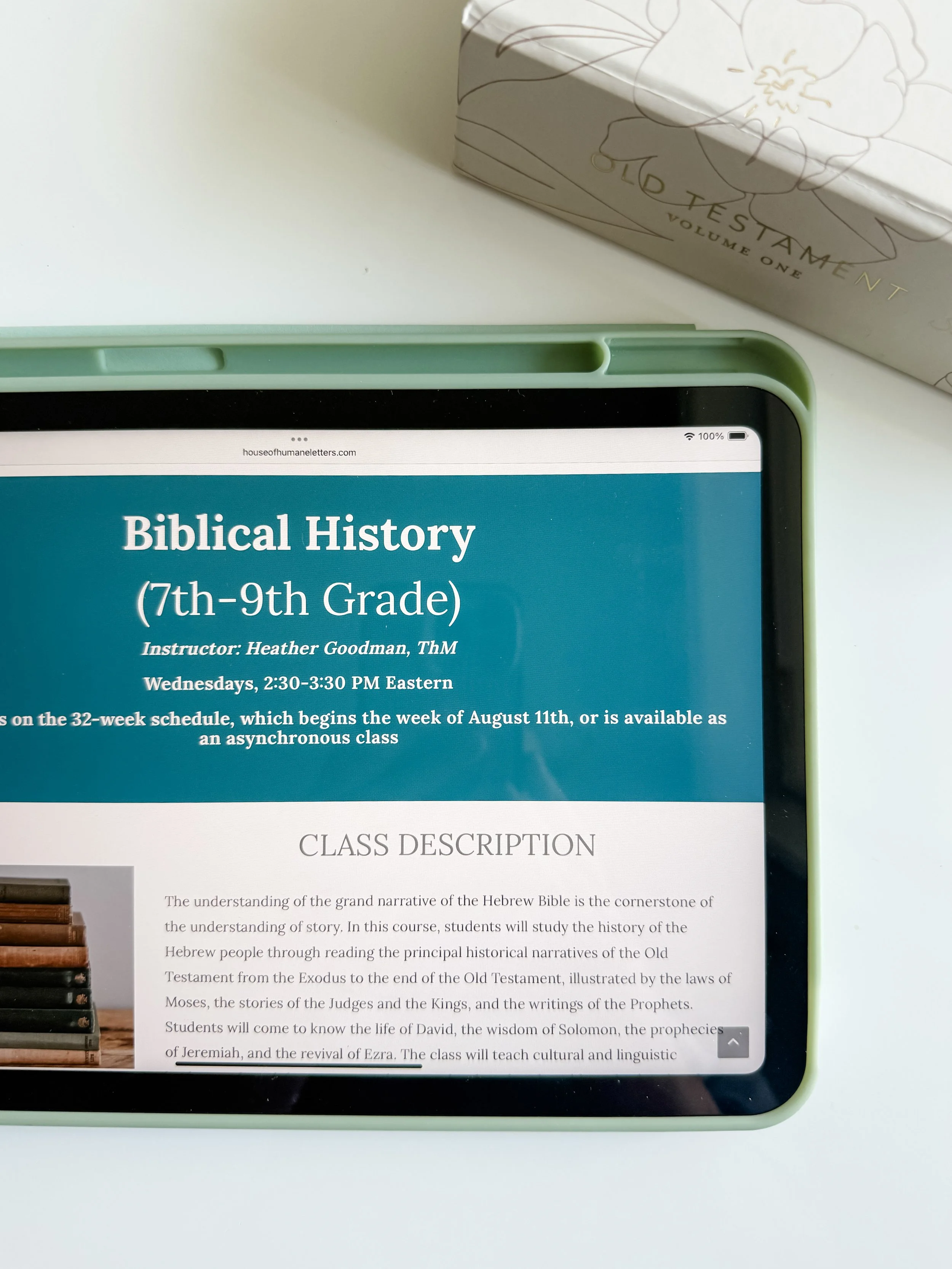
House of Humane Letters Biblical History Course: Registration for this class is closed, but the course will start again in August so it’s something you could keep on your radar. My older girls (12) and I are about half way through it and it’s great. This is definitely teaching us to see more of the literature patterns to the OT.
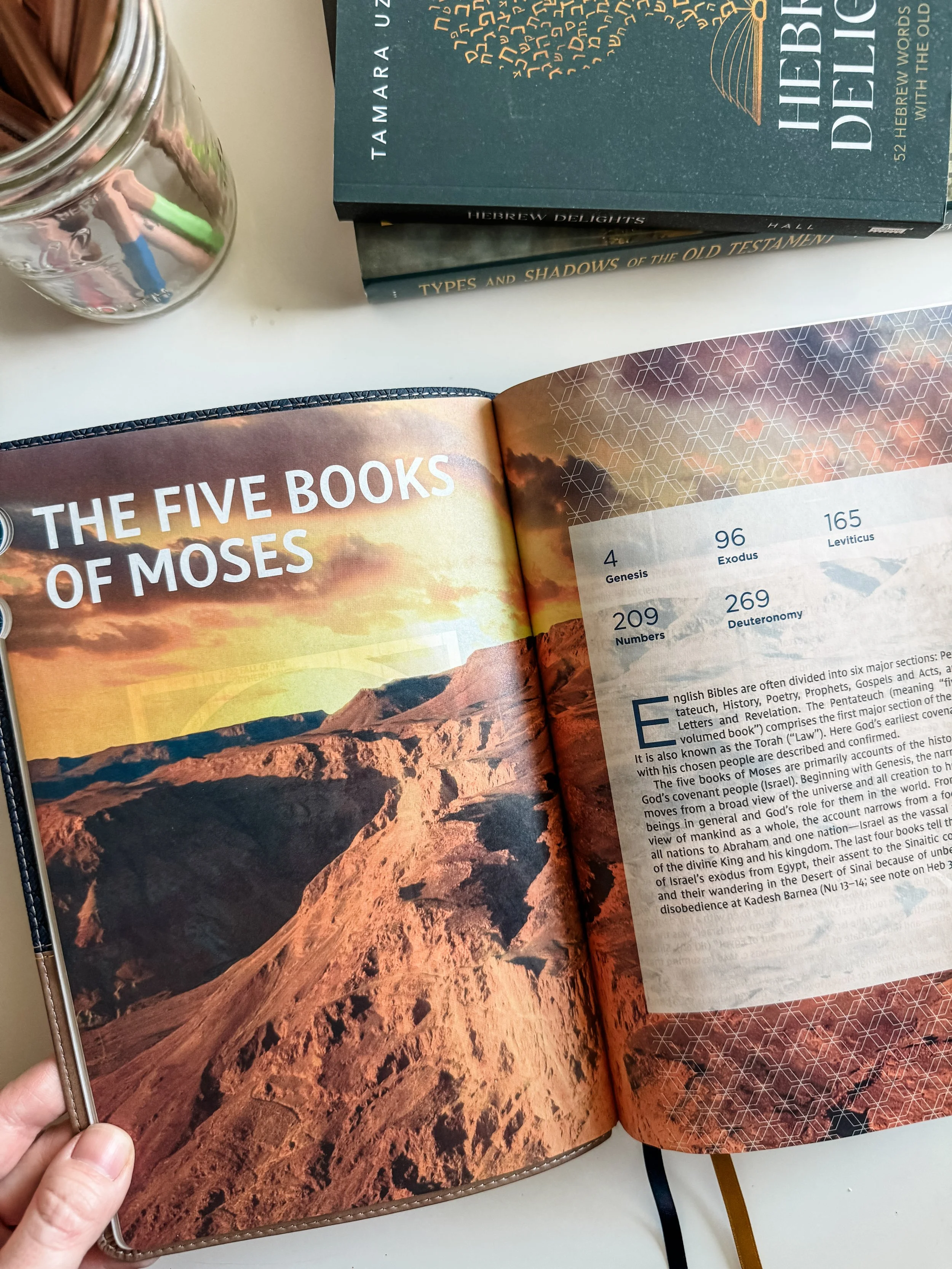
Types and Shadows of the Old Testament: Again, this is along the lines of a literary study. I haven’t dug into it yet, but I am hoping to read it after I get a better grasp on the feasts & stars.
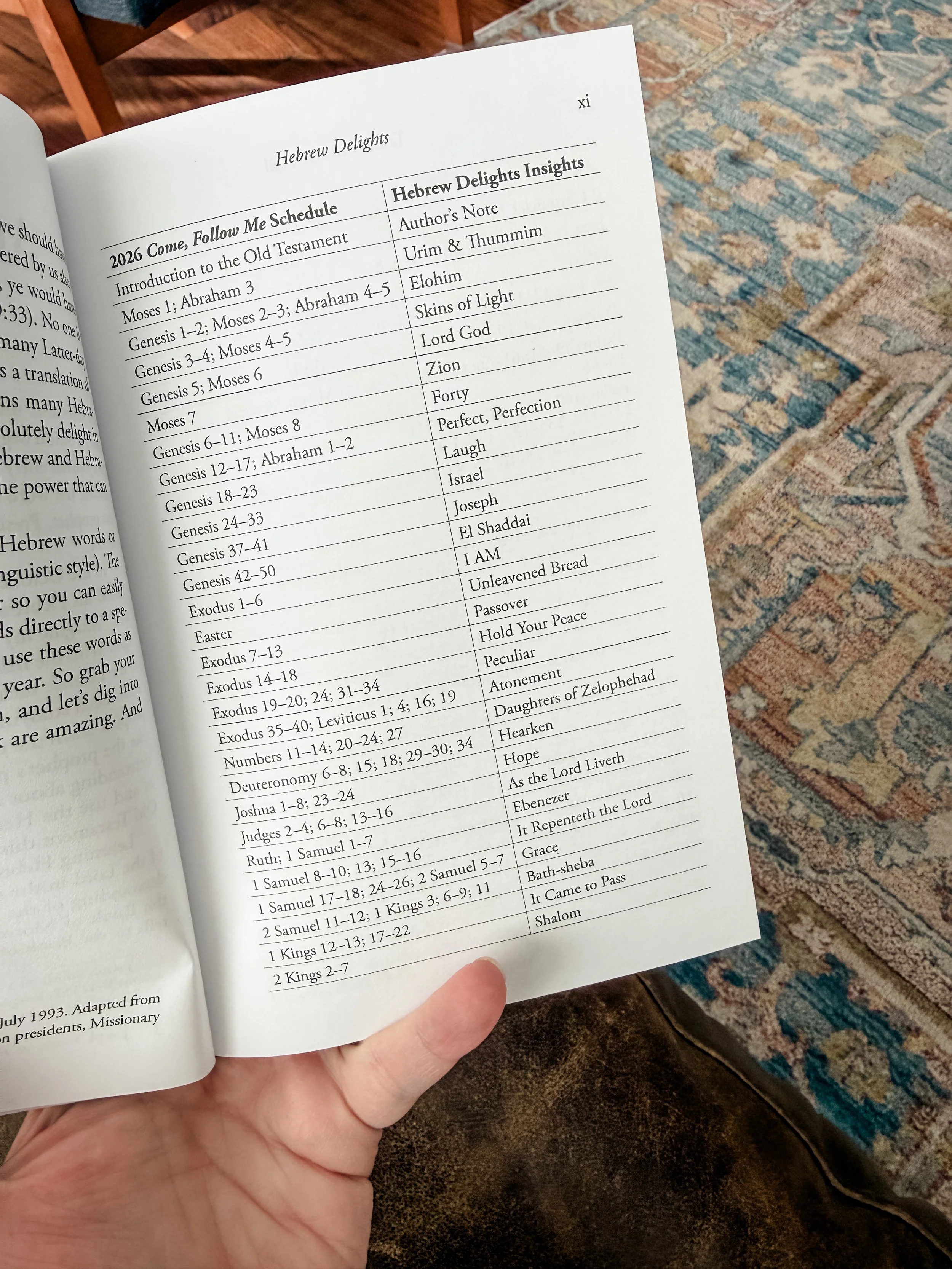
Hebrew Delights: 52 Hebrew Words to Fall In Love With: So far, I am loving this book and would highly recommend it. It coordinates with the CFM schedule which is perfect and makes it really easy.
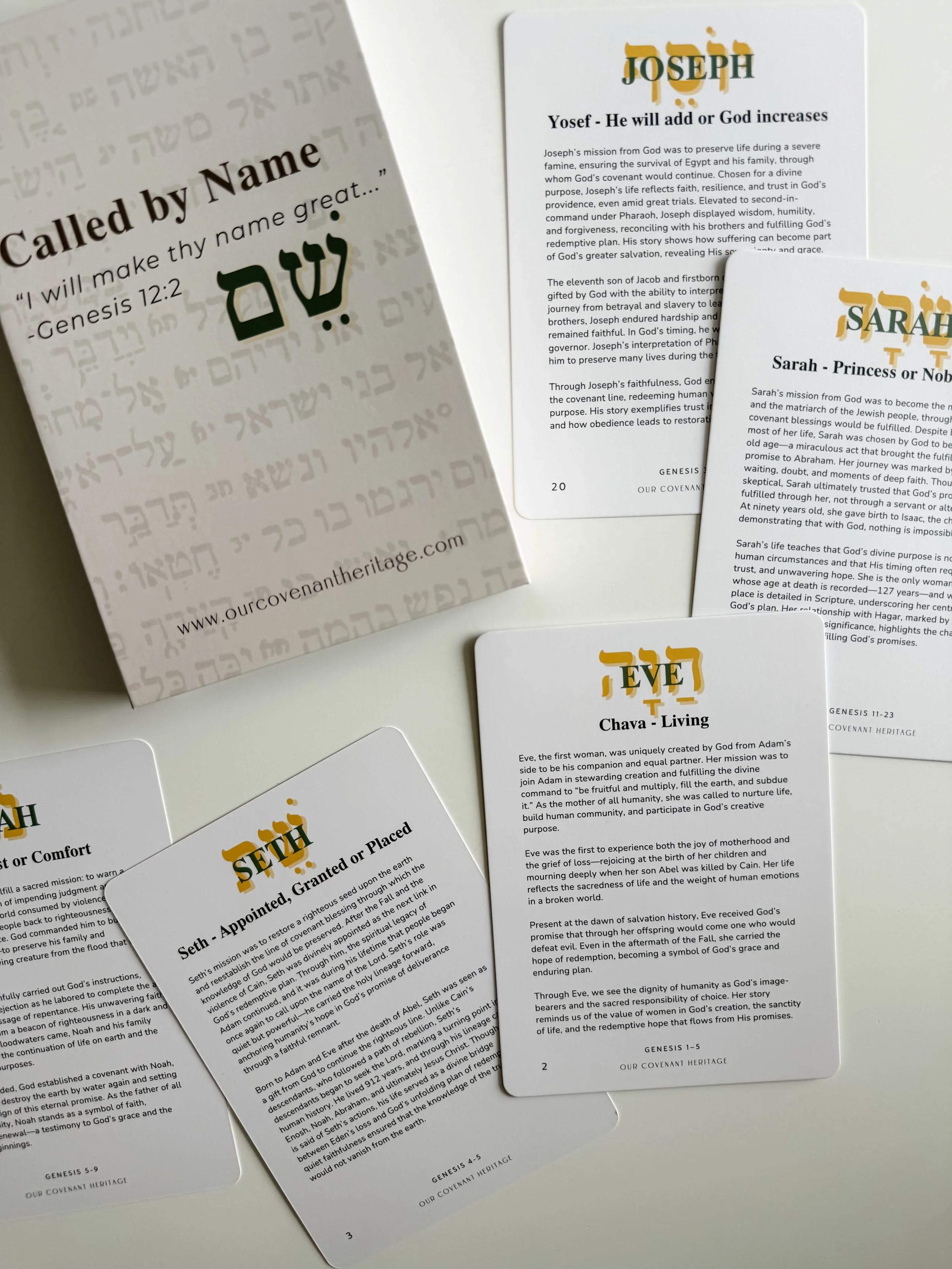
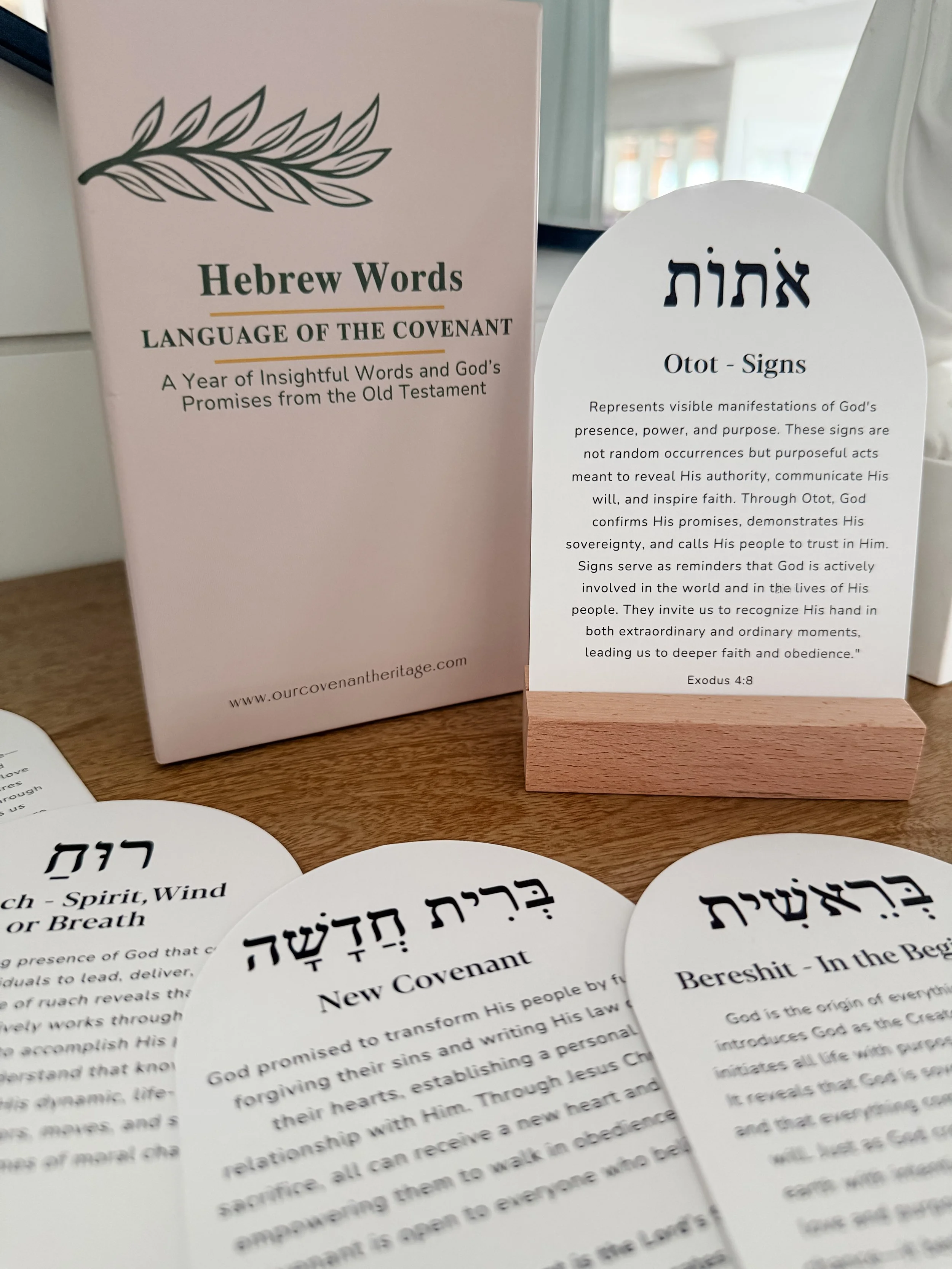
Our Covenant Heritage: This is my new favorite resource and is one I found after I went back and re-worked everything. I think this was definitely one of the things I was originally “missing” so I am so happy I found it. From here we’re using the cards Called by Name and Hebrew Words: Language of the Covenant. They make me so happy!
Celebrating Bible Feasts in Your Home or Church: Again, this is another one I found after searching more and I am SO excited about it. It’s THE simple book I needed to help me better understand biblical feasts so I can continue to teach my kid's about them. I’m just using it as we work through the year so this first month we’ve been working on Shabbat and being more intentional about our Sabbath days and I am just starting to learn about the Spring feasts.
The Feasts and Festivals of the Messiah: And, this is the more advanced, LDS authored, book I got a long to with Celebrating Biblical Feasts. It is perfect and exactly what I was looking for to really deepen our knowledge of the feasts and traditions around certain seasons.
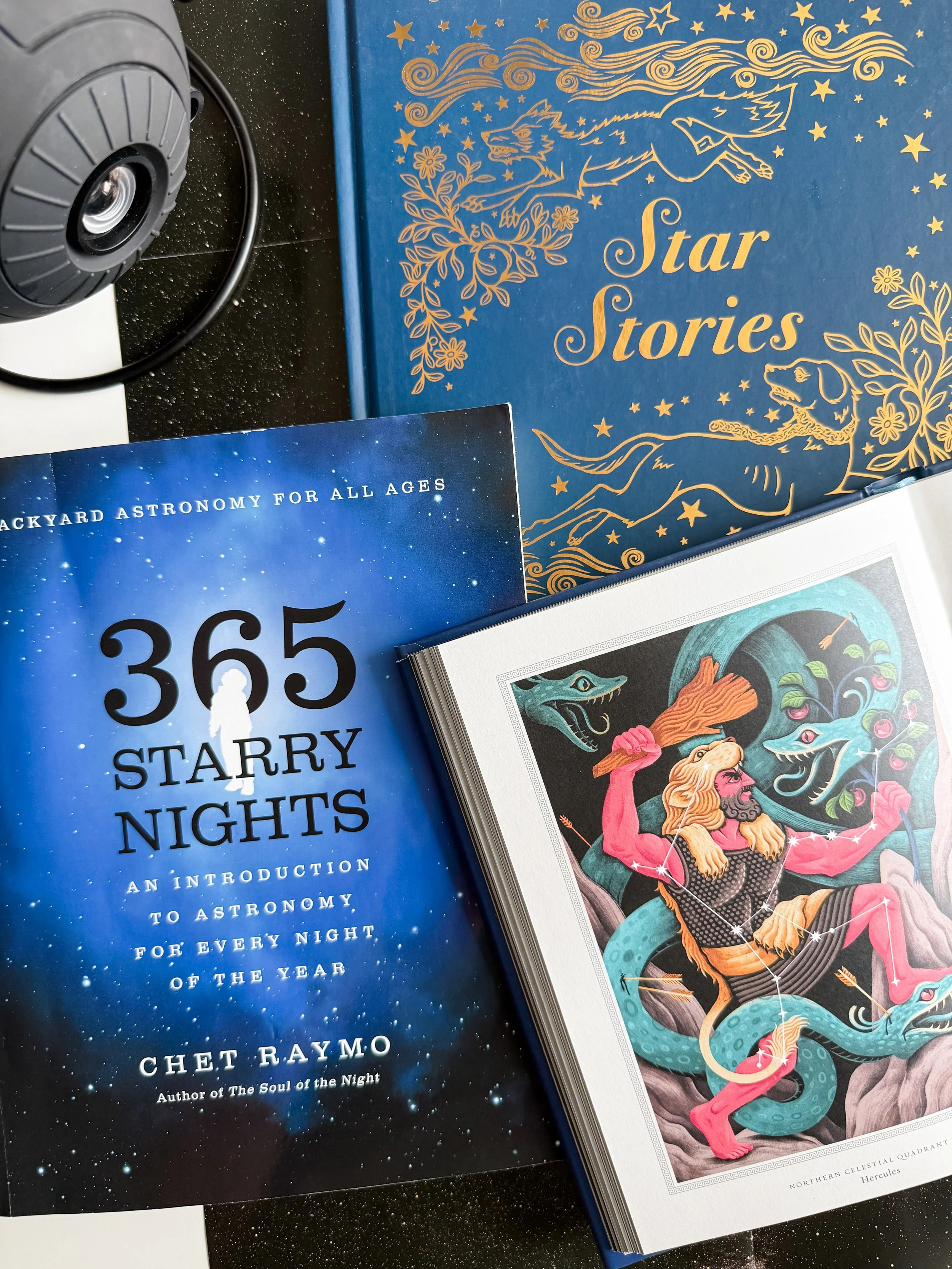
365 Starry Nights: I’m SO excited about this book. I saw this recommended on Stick of Joseph by David Butler and it’s exactly what we’ve needed! Mini-lessons in this book start January 1, but they’re short and easy to catch up on. To go along with the book, I’ve got four other books I’ll likely be pulling from:
Right now, I’m just reading some of the mythological stories that go along with the constellations that we encounter in 365 Starry Nights and also using YouTube videos and other web resources to go deeper. Sometimes it can be hard to track down a clean and good version of Greek Myths so I also have the D’Aulaires book I’ll likely use as well.
Star Projector: My BFF got this for me for Christmas because she knew exactly what I really wanted to study, ha! It is perfect and we’ve loved using it along side our Starry Night book. We have it set up in our theater room so it’s so cool! We have two discs to go with it - the northern constellations and the northern sky (without constellation lines). I had a hard time finding these discs so you may need to shop around a bit if you decide to get one of these. It’s been a life saver for these cold winter nights though and the kids think it’s so fun. If you want to invest in one of these, watch Ebay for better deals…that’s where my friend got mine. You can also browse the Sega Homestar Website.
Final Thoughts
I can’t tell you how good it feels now that we’re settled into this study. I seriously considered letting this post go and just not ever typing it all out because it ended up taking so. much. time. But, I am so grateful for it because I feel like the Lord used my accountability here to really push me and help me figure out what our family needed instead of just going a similar route we've always gone. Also, I hope you know, whenever you stumble across this post, it’s the perfect time to start your own study or re-commit to a study of the Old Testament.
Other Posts You May Like: