
Old Testament Study Part I: Beginner Tips & Resources for Kids
The Old Testament is a story we’re invited into. Creation, fall, wilderness, atonement, restoration, covenant and kingship. It’s a biblical pattern that reflects and plays out in our own lives over and over again.
If you’re new around here, at the beginning of a new year we align our family scripture study with our church’s scripture study schedule and it’s all a very big part of our homeschool. This year, The Church of Jesus Christ of Latter-day Saints is studying the Old Testament so today I’m sharing some beginner tips and resources for this study. Later this week I’ll be sharing the resources and classes we’ll be personally using.
For those familiar with Come, Follow Me, it is near and dear to my heart. Gospel study was the very first place I worked on when we decided to homeschool, because I knew, without question, that my highest priority was teaching my children the gospel. Before curriculum choices, schedules, or anything else, I wanted our home to be rooted in Christ. And, little by little, over the last six years and with a lot of work, the Spirit in our home has grown into something more incredible than I ever could’ve imagined. God’s hand is truly in all knowledge and when our learning is centered on Him, everything else finds it’s place.
As with anything I share, I hope this serves as a starting place or piece in your and your family’s spiritual journey. How we teach our children and what we use to study will look different in every home. My prayer is that each family feels empowered to seek the Lord’s guidance, listen for the whisperings of the Spirit, and make decisions that are right for their circumstances. I believe God honors the faithful work of parents who turn to Him and seek His companionship in educating their children.
Now, this will be our second time formally studying the Old Testament since beginning homeschooling and I’m thrilled. In some ways I still feel overwhelmed. The Old Testament is such a big book. But in others, I look back and just know we’ve all grown and changed so much over the last few years and we’ve got a really good foundation under us so I can’t wait to see what the Spirit has planned to teach each and every one of us this year.
Suggestions for Beginners
With a new year comes a time to refresh and recommit to scripture study. If you’re in that place or maybe this will even be your first attempt at more formally teaching your kids scripture, I want to share a few tips and just some things that have helped me over the years.
Like I mentioned, later this week I’ll be publishing another blog post on what we’re using for our Old Testament study and when I was gathering my thoughts, I was worried someone might stumble across what we’re doing and be overwhelmed. So please just know…so much has evolved and changed over the years and we’re just in a different place then where we were years ago - especially with younger kids. My hope here is to just offer some simple and foundational ideas that has helped us build toward where we are today without any pressure or guilt.
1. Set a Simple & Realistic Goal

Where are you now and where do you want to go? Start by choosing a small, achievable goal for dedicated scripture and gospel study time. Look honestly at your current reality:
Do you have babies or toddlers? Elementary-aged children or teens?
What do you hope to change or strengthen in your home?
What does each child need right now? What do you need?
Focusing on our current reality and envisioning where I want to take us is something I still look at and re-evaluate all the time in our spiritual and academic growth. A good way to do this is to write your current reality at the bottom of a sheet of paper and where you want to go at the top. Then start on the bottom line and work your way up brainstorming and listing any ideas that come to mind that can take you from where you are to where you want to go. Ask yourself: What can I do to reach my ideal? Remember, ages and stages evolve and your gospel study routine needs to have the flexibility to constantly be shifting and changing too.
2. Prioritize Consistency
I think consistency matters far more than the length or complexity of your lessons. I often compare gospel study to brushing teeth…I want it to feel just as normal as the very basics of self care…because it is. Daily spiritual nourishment is needed for you and your children.
I think one of the easiest ways to build consistency is to attach scripture/gospel study to an existing habit. Meals are usually the simplest: before breakfast, after lunch, or as part of the bedtime routine. This may not work for everyone, but it’s something to try if you’re struggling to establish a go-to rhythm.
When I first made a conscious effort to be more intentional about teaching my children, I had four young kids…ages six down to nine months. A one-hour formal Sunday lesson felt completely unrealistic. So instead, I broke it into five to ten minutes a day and it stuck. I thought “K, I can do anything for 5 minutes.” That’s where I started and now, somedays, we’ll spend an hour…multiple times a week…in study. Just start.
3. Invite & Recognize the Spirit In Your Teaching
Always begin with prayer to invite the Spirit into your home and study. If you’re struggling transitioning from a chaotic moment or arguing siblings, try using music to help with the transition and settle the mood down. My go-to song to turn on is Come, Thou Fount, but any hymn or more relaxing song can quickly change the mood in a home.
And remember that at every age, part of our role as parents is helping our children recognize the Spirit. When the Spirit touches their hearts, name it for them. Say it out loud. “That peaceful warm feeling is the Holy Ghost.” Model and express what it feels like and what it sounds like when truth is present. Also, when you feel the Spirit while teaching, express it. Your children learn how to recognize the Spirit by watching you do it first. I know so many people read or listen to scriptures on their phones these days, but I'd also encourage you to try to read out of the physical books so your children can see you. A mother’s example is so powerful and children mimic so much.
4. Begin with Story & Illustrated Imagery
I believe the foundation for understanding scripture at any age, even for adults, is story. Stories give context and meaning. They invite emotional and spiritual connection because, like I mentioned above, the same struggles, choices, and redemptive patterns we encounter in scripture play out in our own lives. Through story and I think illustration can really help with this, children (and parents) begin to see themselves within the scriptures and more clearly understand God’s relationship with His people and the relationship He lovingly invites us to build with Him.
As children and adults learn to notice the imagery in these stories…images like moving from chaos to order, the unfolding lineage of the seed of the woman versus the seed of the serpent, crossing doors and thresholds across gardens and arks, the contrast between light and darkness, exile and return, or the way God comes to dwell among His people through sacred spaces like the Tabernacle and the Holy of Holies…in all of these pictures scripture becomes more than words on a page. It becomes part of who we are, shaping how we see God and naturally we can’t help but gravitate toward Him. These images act as anchors, helping us recognize God’s repeating patterns of teaching. One of the most powerful ways to begin seeing these patterns is through illustrated story itself, which is what so much of scripture truly is…especially in the Old Testament.
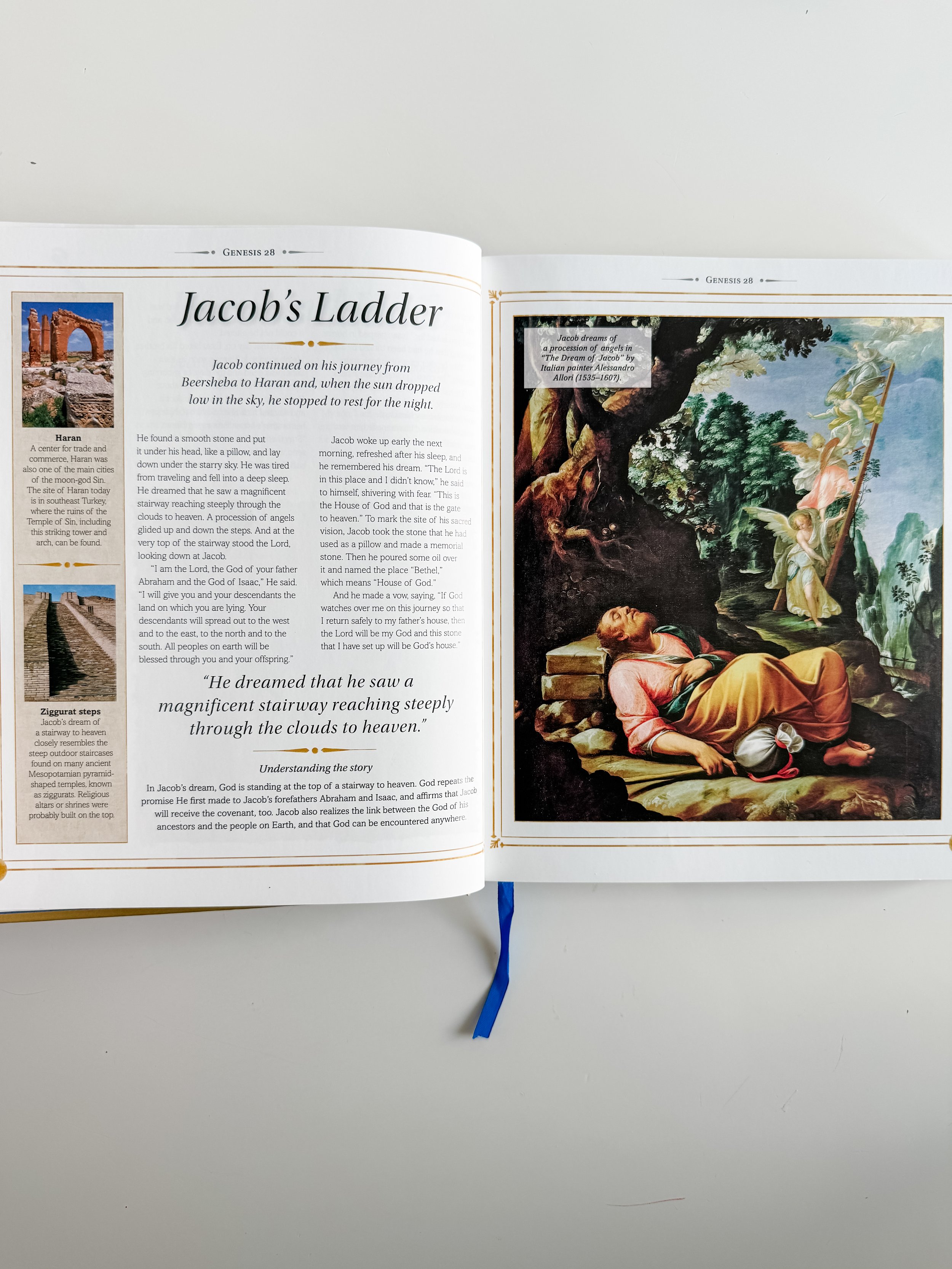
So, let’s talk about some options for illustrated Bible stories. Here are some of my recommendations and a few of my thoughts:
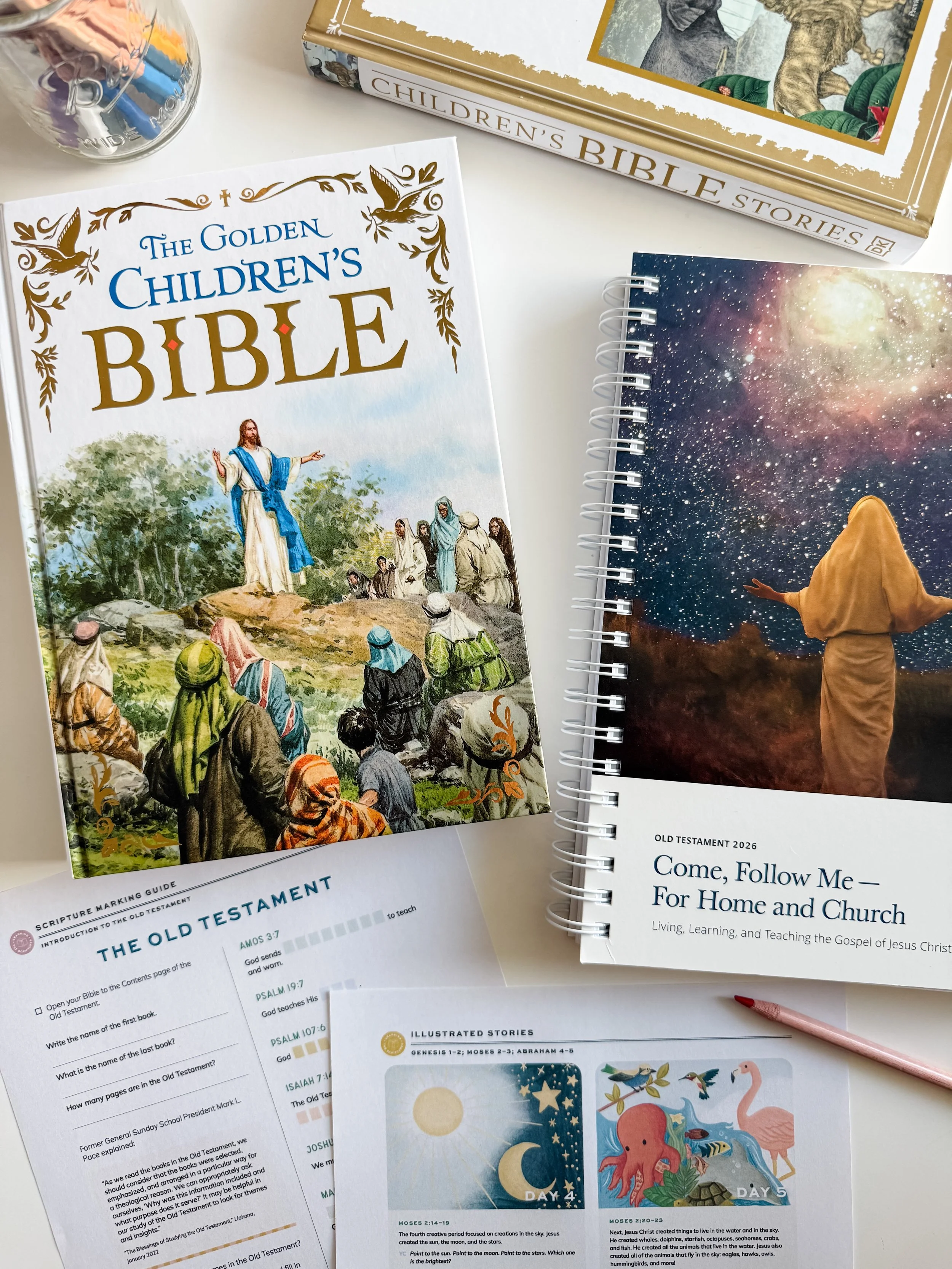
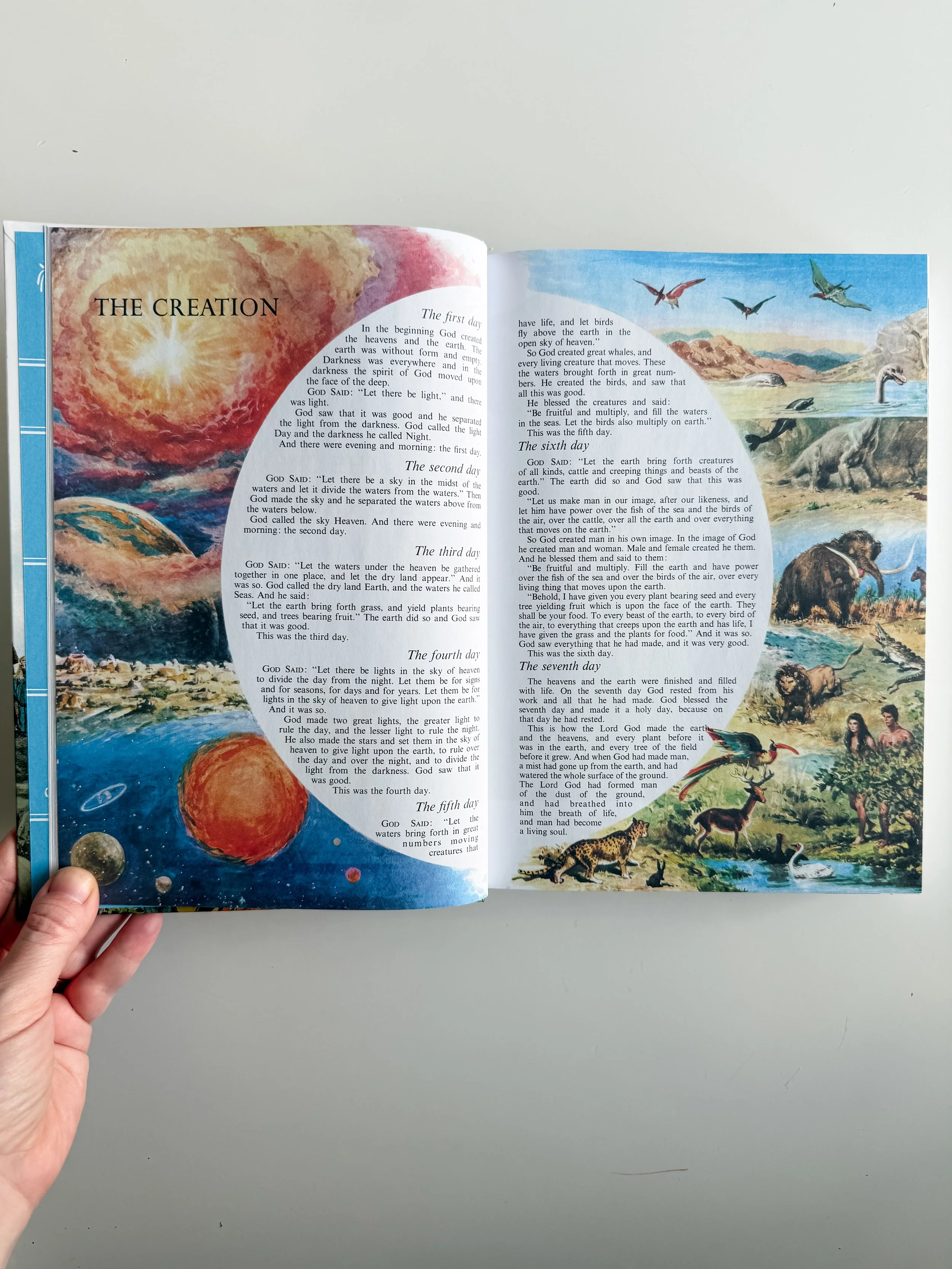
The Golden Children’s Bible: This year I decided to use this book and think it’s fantastic! I prefer the illustrations in it over some other books out there (though so of them are still not my favorite, but I’ve learned it’s hard to find anything I’m 100% satisfied with, haha.) I also went with this one over other storybooks on the market because it had a lot of OT stories where many others only had the highlights. I also appreciate its neutral stance on The Fall. It does not insert any additional opinion on what happened and the wording throughout all of the stories are very close to biblical text and maintains a lot of important imagery, but it’s also simplified enough so children can better understand the text. I have a flip-through of this on my IG story highlight called “OT 2026.”
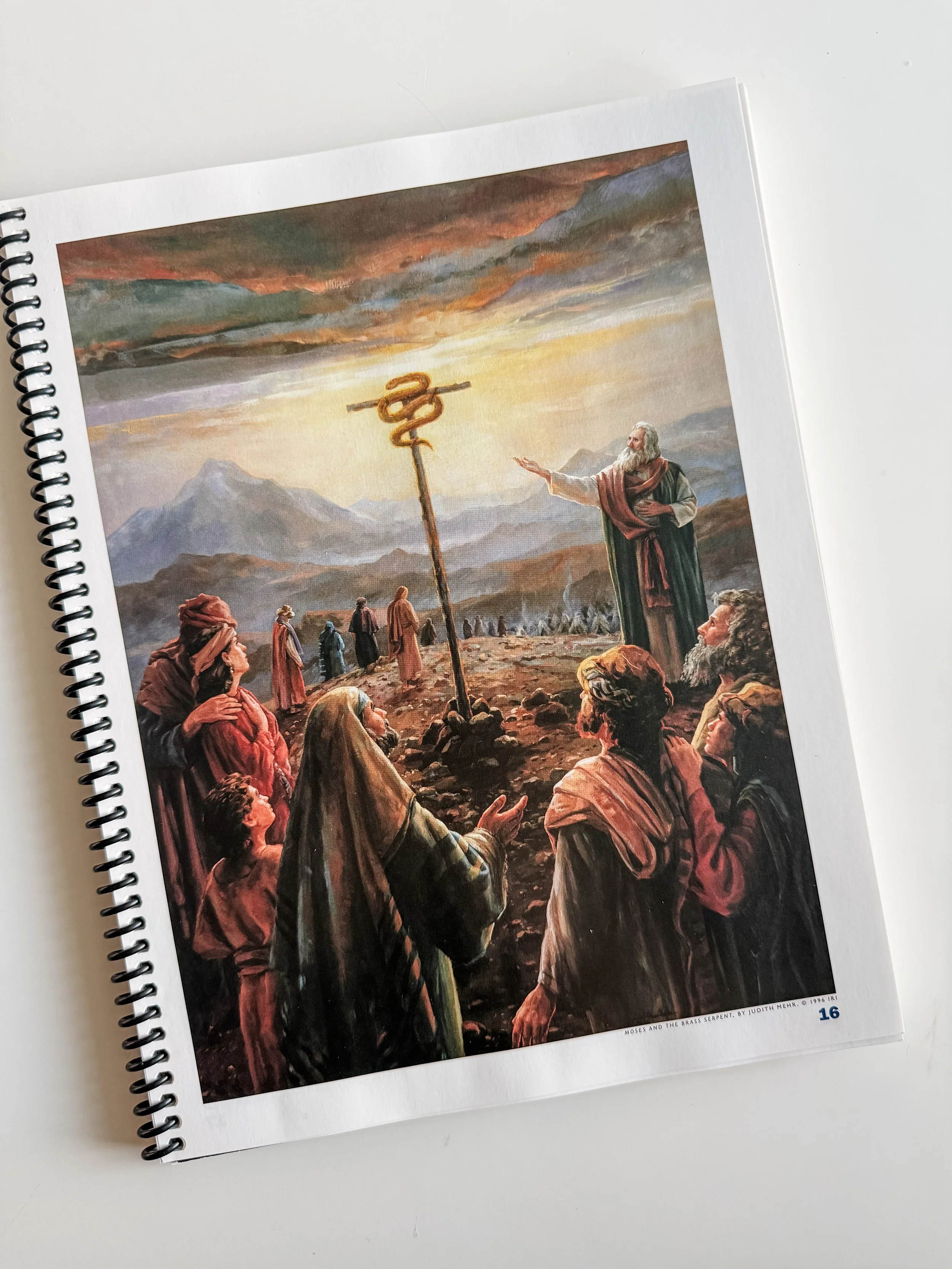
Church Published Old Testament Stories: Admittedly, this isn’t my favorite version, I have the older version and much prefer that over the cartoony style. (You might be able to find the older version online somewhere.) But, either way, this is a good and simple place to begin especially if you find yourself getting overwhelmed with options outside church resources. When my kids were toddlers and very young, these are exactly where I started. And, I do like that you can read or watch them, access them online or buy a physical copy.
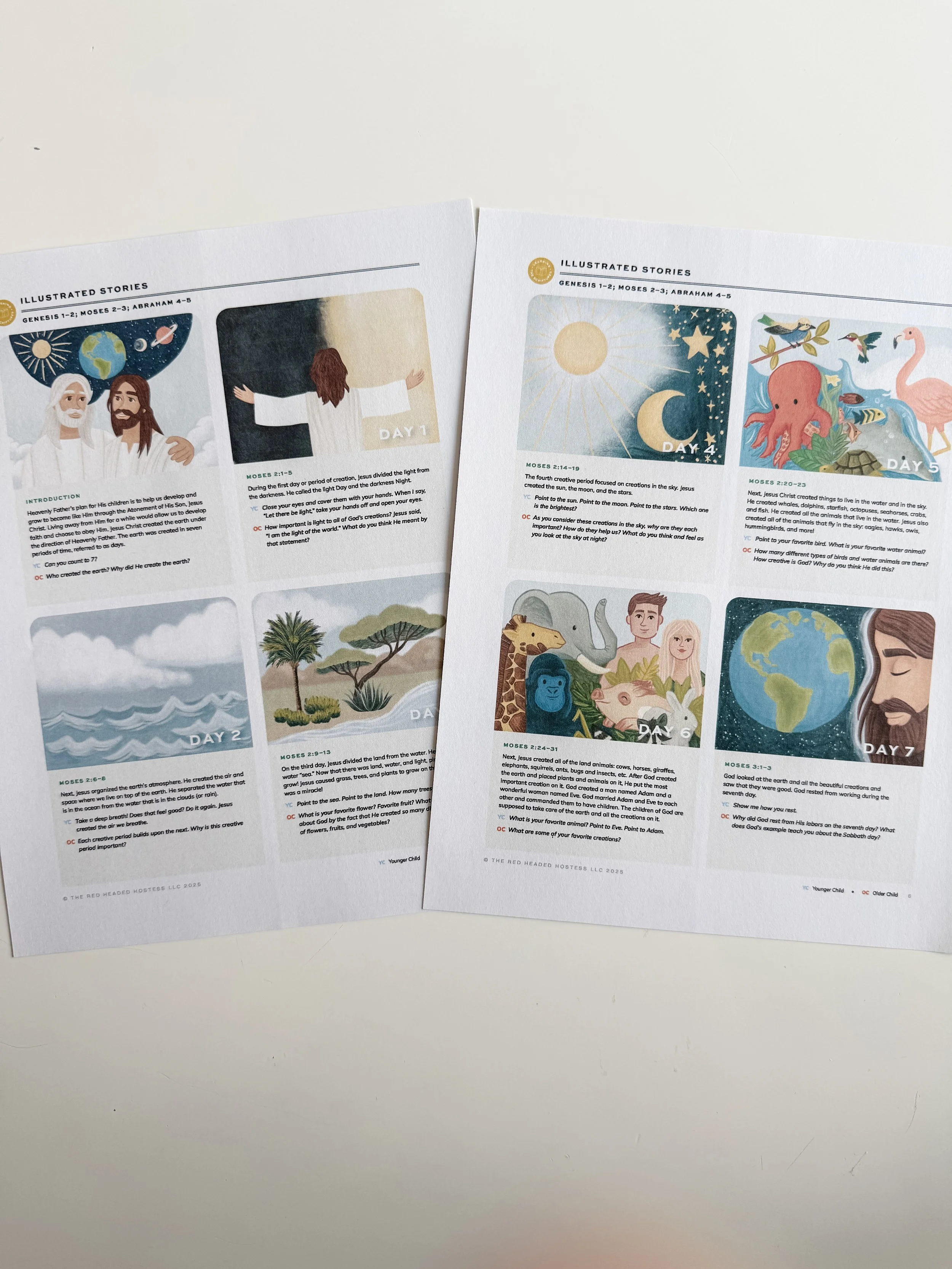
Red Headed Hostess Subscription Kit: Each week, RHH publishes an “illustrated story” in her weekly CFM supplement. I’ve used her kits for years and years and highly recommend them. There are hands-on activities, videos, and scripture study suggestions to go along with the study sections for that week.
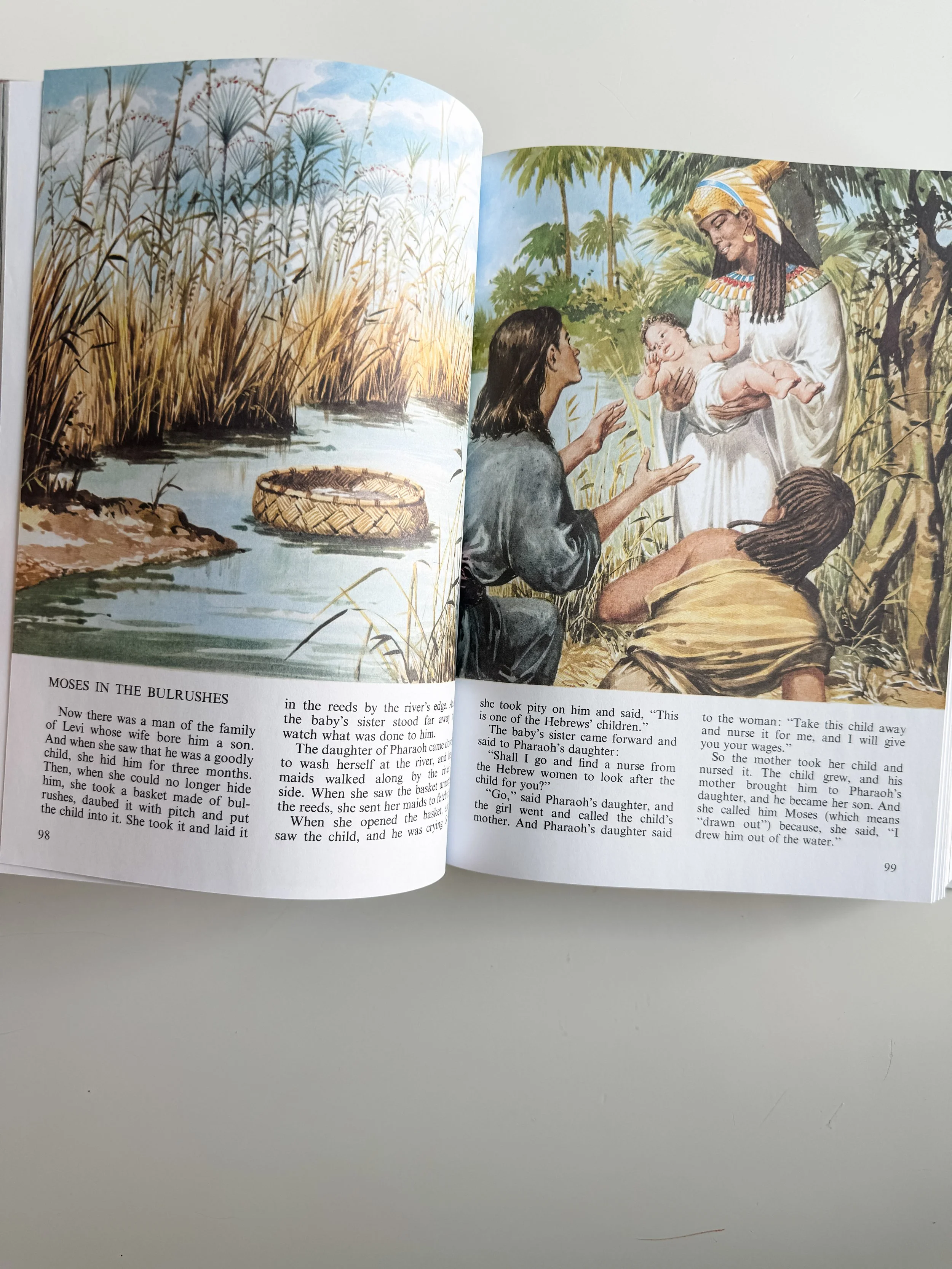
DK Children’s Illustrated Bible Stories: We have this book and I LOVE the illustrations in this one. The only downside to it is there aren’t as many stories in it as I would like. I still pull from this though and will likely do so more during our OT study. Parents should know there is a some biblical classical artwork in it which includes nudity and, in my opinion, just one questionable comment about The Fall.
Stories of the Old Testament: This is a new publication that has been floating around Costco and available at Cedar Fort Publishing. I’d bet since there are three volumes to this it’ll have quite a bit of stories which is great. I haven’t read it, but I suspect it’ll be a popular resource especially in LDS crowds if it’s coming out of Cedar Fort.
Lithos The Kingdom of God: I’ve heard good things about publications from Lithos. I have not read it though.
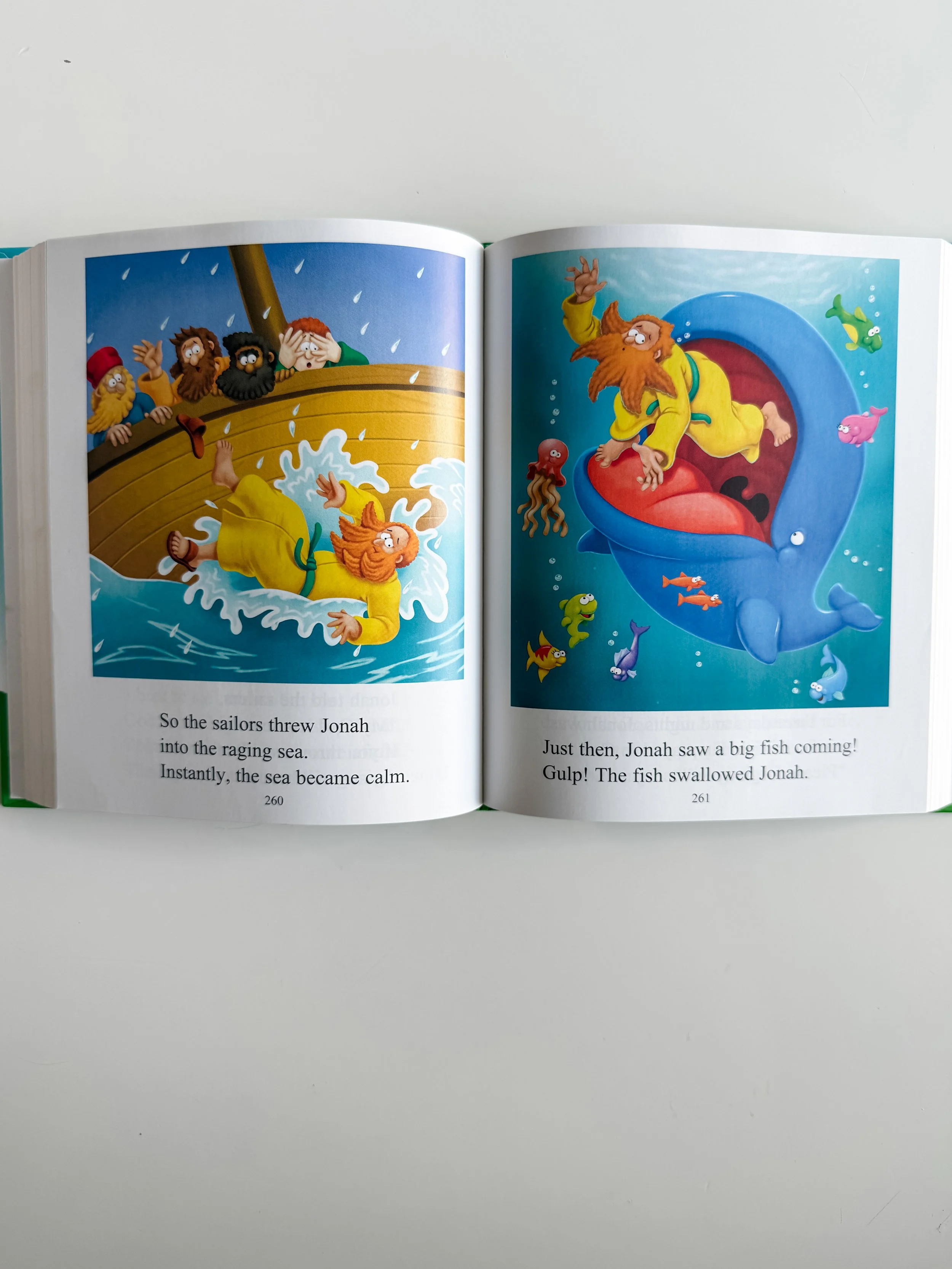
The Beginners Bible: I don’t love the illustrations and bug-eye cartoons in this book. But, I do own it. The short pages and easy text make it feel very manageable for emerging readers and I do love that!
I’m sure there are some other great options, but that’ll get you started researching something that’ll be a good fit for your family. And, just as a heads up, The Biggest Story Bible Storybook is the #1 best seller on Amazon which I’ve already noticed has made it a popular option. Parents should just know there is quite a bit of extra commentary in this one - especially on The Fall and regarding Eve.
5. Have Indiviual Scriptures
I think it’s good for each child to have their own physical set of scriptures and you can personalize it in so many ways now. You can simply use the cheapest scriptures or go more elaborate and invest in a really nice set. At this point, we’re going to have multiple sets and versions and I think that’s okay because times and seasons have called for different needs. For younger kids (under 5) I always recommend something super cheap. It needs to be something you won’t mind if it rips or when they scribble all over it. But, I do think it’s good for them to have their own little copy to carry around especially if they have older siblings they see reading out of them.
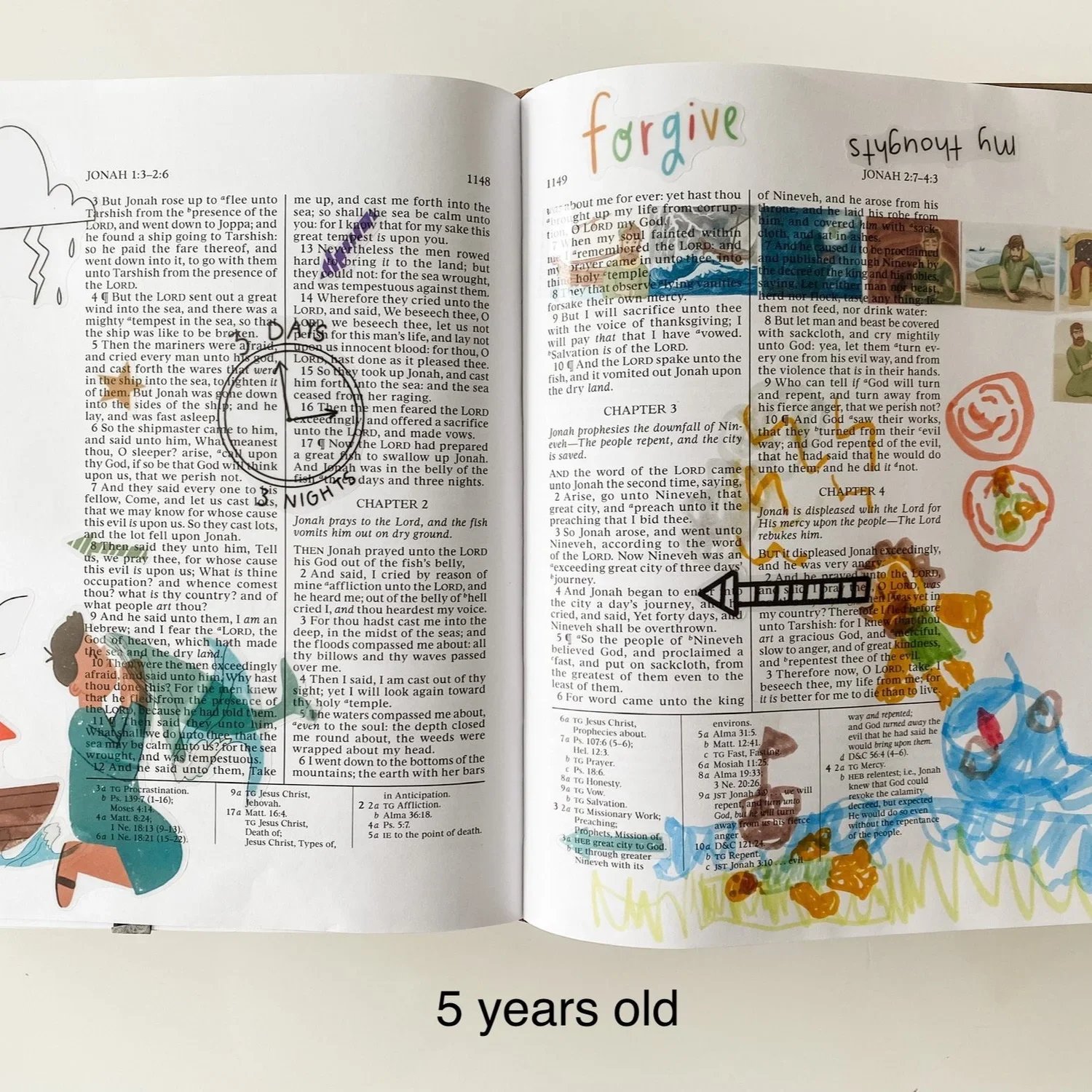
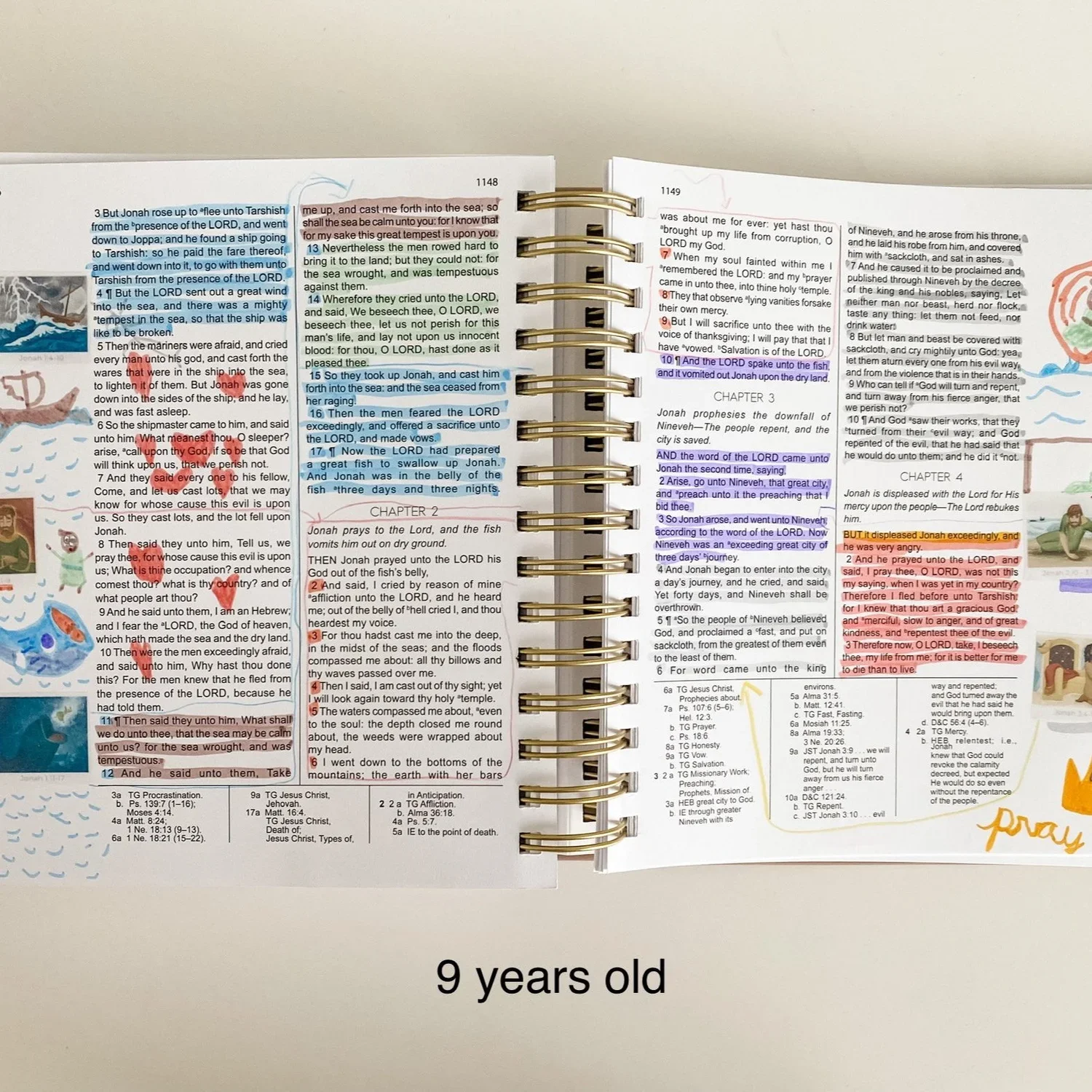
One thing that I’ve noticed has worked really well for scripture comprehension and to make study an overall more meaningful experience is to read a simplified story first and then read the language out of the scriptures and work on marking things that stand out to us or drawing pictures to remind us or express what is going on there. This is one reason I really like the RHH subscription because there is always that simplified illustrated story of the text in her weekly study kits.
In the past I’ve really enjoyed journal editions with wide margins so my kids and myself can draw pictures or use scripture stickers. RHH no longer has scripture stickers so we’ve stopped using them, but if you want some good ones I’d recommend Line Upon Line. I’ve used journal editions from both Deseret Book and Line Upon Line. This year for at home study we’ll also be exploring study bibles and different translations based on the church’s recommendations for reading level so we aren’t using journal editions (and I’ll be sharing more about what we are using later this week). But, we are going to add a little study notebook so we can continue to express thoughts through written and artistic work. My older kids have quads that they take to church.
6. Other Resources
If extra materials feel overwhelming, I recommend starting with just a few trusted resources:
The Come, Follow Me manual. Sometimes I hear people shy away from using this because their kids get the same lessons in seminary or at church on Sunday, but I don’t think the repetition is ever bad. There is always something new to learn. You should always get a free copy through the church, but there is a nice journal edition you can purchase at Deseret Book. I LOVE the artwork in the manual and many times that’s all I use from it.
An illustrated storybook (suggestions above)
The Gospel Art Book: This is a resource you can easily pull up online on an iPad or print them off. Or, buy a physical copy. I keep this hanging in my school room year round and depending on what we’re studying I have the artwork displayed. I use it for storytelling or even a little art study. I think its important we still utilize this art because it’s classic and recognizable in church and seminary.
Church’s Additional Resources for Teaching Children: This is a compilation of extras the church have to coordinate with CFM for kids. They also have the Gospel for Kids videos on YouTube, but I don’t think they always coordinate with CFM.
If you’re excited to explore other resources, here is a brief list to get you started. I’ve added a few thoughts on some of the resources I’m more familiar with. And, as a disclaimer, I haven’t used everything here.
Red Headed Hostess: If you can’t tell, I love RHH and will probably utilize her resources forever. She has something for everyone in her subscription: children, teens, and adults. The Drawn In videos are also included in her subscription.
Latter Day Kids: Fantastic for children and families. We use these videos regularly.
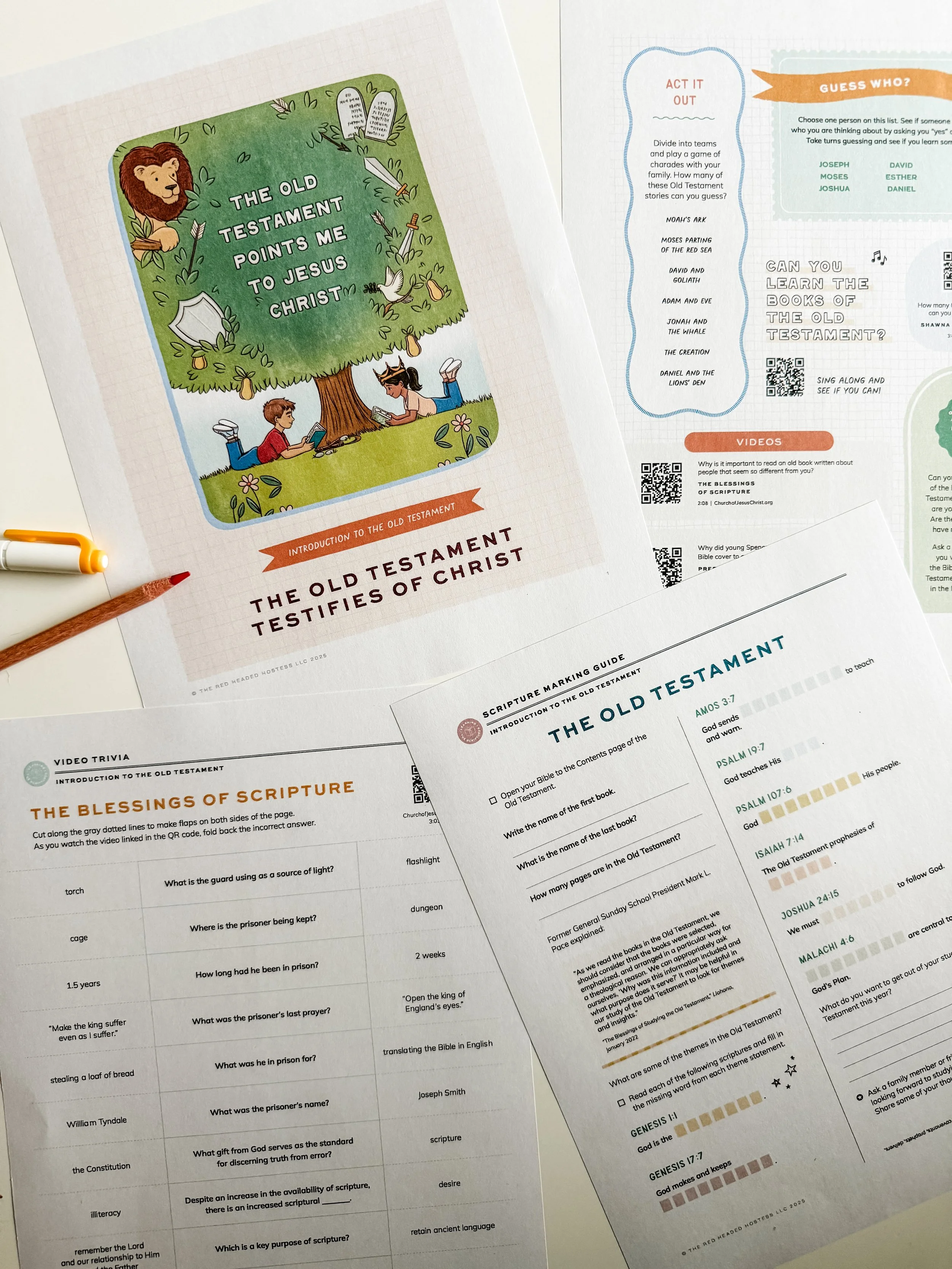
Old Testament Handwriting & Copywork: I made these and used them our last time in the OT. I think they’re really good for kids because it gives them that space to express their spirituality and what they’re learning through writing/drawing.
The Old Testament Family Reader: I haven’t used the OT one, but I really like the NT one of these and I think they’re great especially if you’re looking for like a morning devotional or quick 10 minute resource to gather your family.
Girls Who Choose God: Stories of Courageous Women from the Bible: We have the BOM version of this and love it. I haven’t read the Bible version.
CFM FHE: Digital online subscription of resources
CFM Kids Podcast: These are short 15 minute episodes.
CFM Toddlers: If you’re anxious to start hands-on and play based CFM with your very young kids - this is the place you’ll want to be!
Fuller Gems OT Videos: Better for older youth.
Etsy is another place to look for supplemental resources.
Final Thoughts
Remember your gospel study doesn’t need to be perfect to be meaningful. You don’t need to know everything because the Spirit is the master teacher. So much of all of this is just setting the environment and inviting the Spirit in to teach. Start small. Work to be consistent and make spiritual nourishment a priority. Wherever you are…God will meet you right where you’re at and help you and your children grow. He loves effort and loves our desire to teach our children to know Him.
Next, I’ll be diving into what resources we’ll be using this year so if you’re looking for a little more, be sure to check out my next post!